Samvedana: A Special Campaign for the Maldhari Tribe
Samvedana: A Special Campaign for the Maldhari Tribe
Problem
- Limitations to provide routine benefit to people living in forest areas as many of the nesses are not declared as settlement villages
- Need a special type of vehicle as forest routes are not motorable
- Difficult for the administration to convince the tribal people to apply for government schemes and benefits
- Lack of education
- Under India Forest Act and Wild Life Protection Act, there are restrictions to extend benefits to the forest dwellers
Solution
- Setup stall for various schemes and benefits at the location of function for distribution of benefits
- A team of expert doctors from Gujarat Cancer and Research Institute carried out a health checkup of Maldhari families
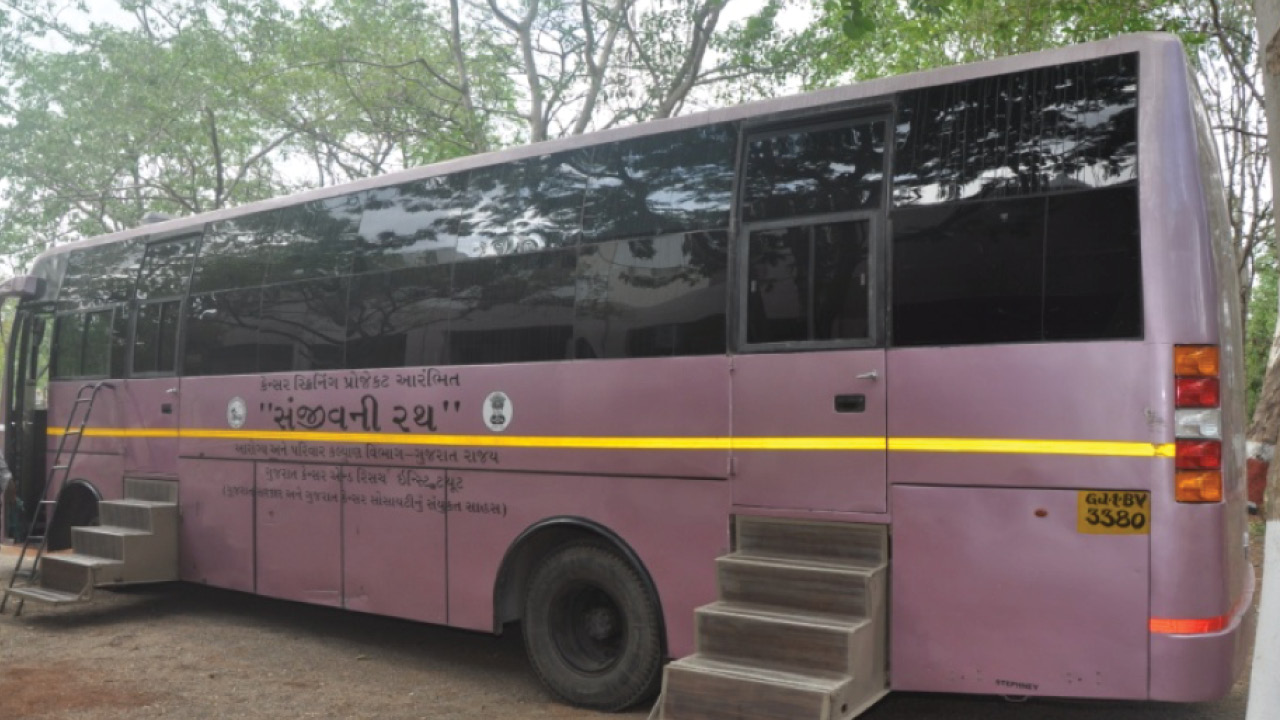
- Special Sanjivani Rath, a vehicle equipped with all medical facilities was stationed at the location and treated Maldhari patients therein
- The police department conducted training under the Suraksha Setu Programme
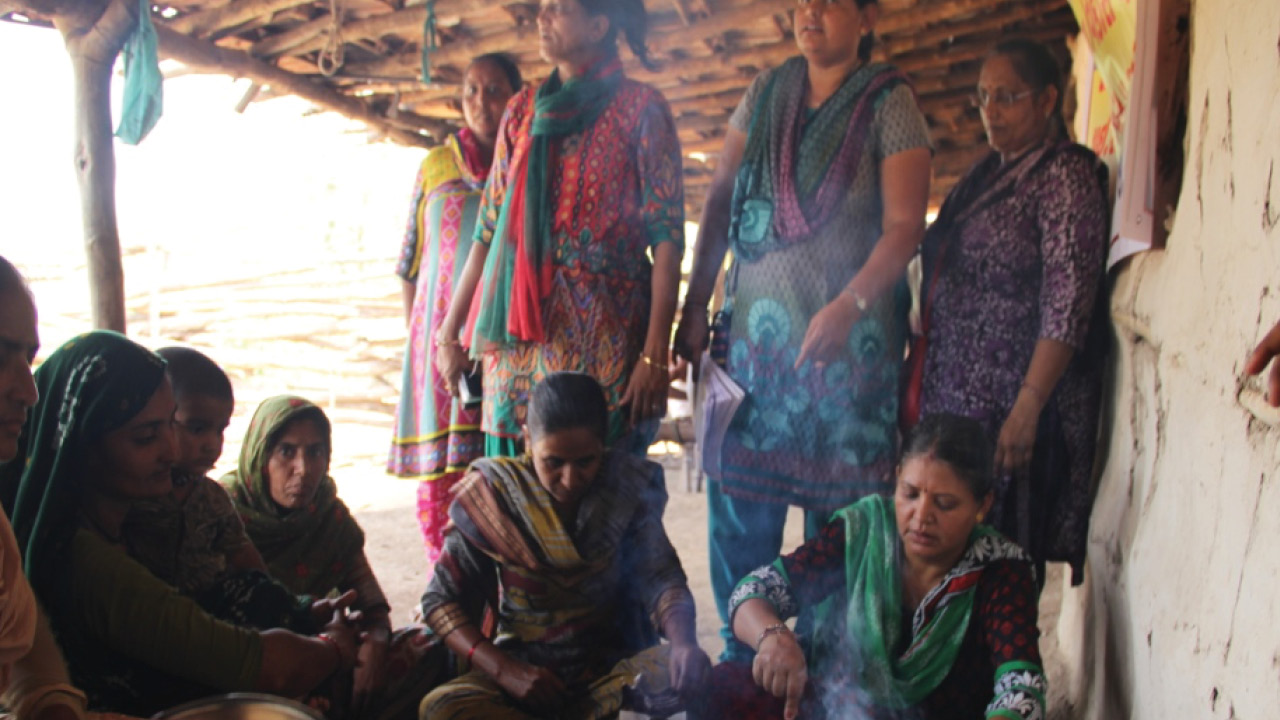
- The team of ICDS & DRDA carried out activities regarding Mission Mangalam and Sakhi Mandal
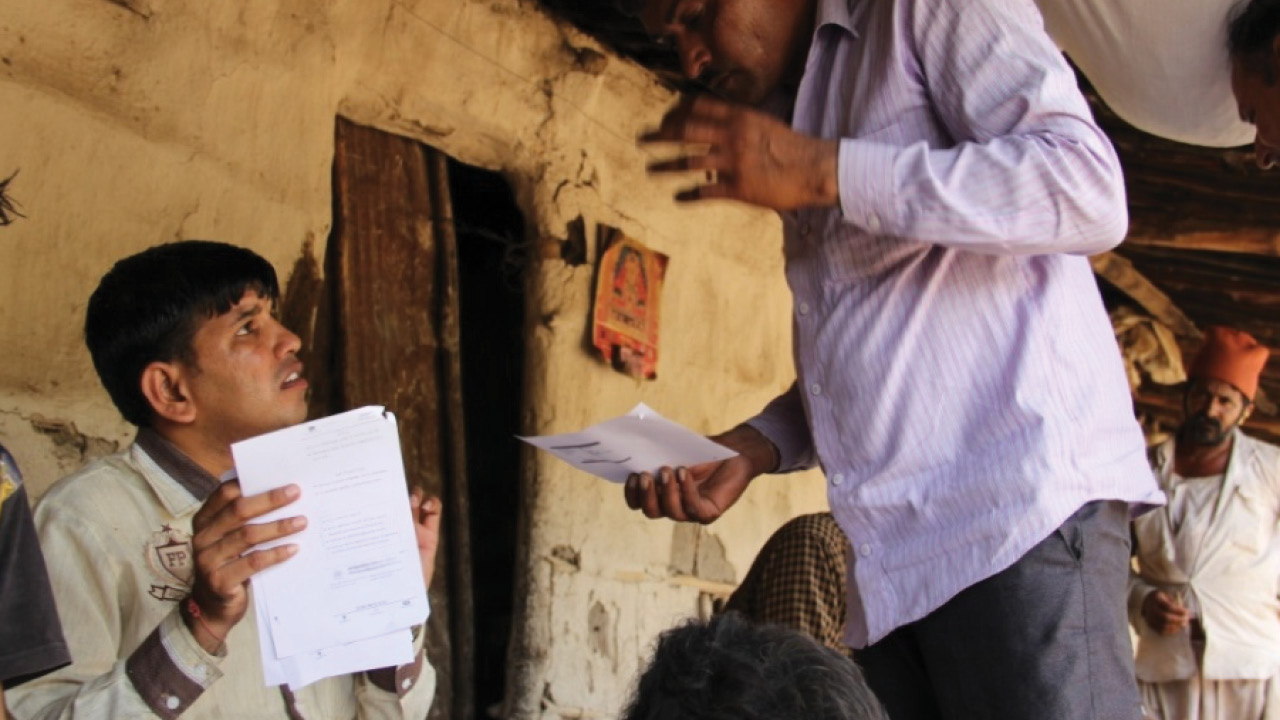
- Officers and staff of the revenue dept carried out the procedure for Pension Assistance and issued Ration cards, Aadhar Cards, Electoral & Election ID Cards
Outcomes
- Ensured all applicable government benefits reached the last citizen residing in the remote and inaccessible forest area
- Enabled quick benefits to Maldhari families
- Bridged the economic and social gap between tribal forest areas and other areas of the state
- Improved Human Development Index and the social and civil infrastructure in tribal areas
- Created awareness among Maldhari families about various government schemes
Project Details
Category: Social Welfare
Project Title: Samvedana – Distribution of benefits to Maldhari Tribes of Gir Forest Ness under the Gatisheel Gujarat Programme
Department or District: District Administration, Junagadh
State: Gujarat
Start Date of the Project: The campaign began in May 2014 and was executed with major implementation during May–June 2015
Website: https://junagadh.nic.in/
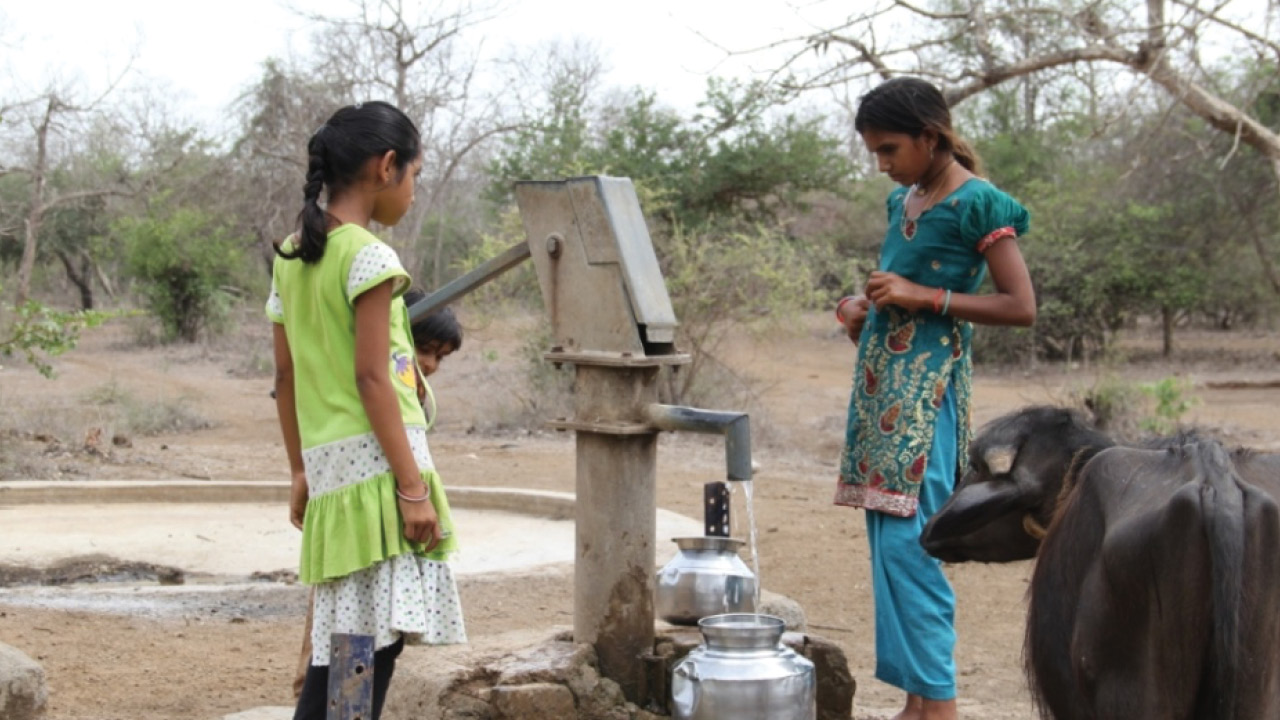
Tribe(s) that the Project Covers: The campaign specifically targets the Maldhari tribe, a Scheduled Tribe (ST) that has lived in the Gir Forest for over 125 years. Maldharis are traditionally pastoral communities residing in settlements called ‘nesses’ spread across the forest area in Junagadh district.
Keywords: Maldhari Tribe, Tribal Outreach, Forest Governance, Convergence Model, Special Campaign, Scheduled Tribe Empowerment, Mobile Governance, Multi-Department Delivery, Aadhaar, Ration Card, Voter ID, Forest-Dwelling Tribes.
The Gir Forest in Junagadh, Gujarat, is globally known as the habitat of the Asiatic Lion and is also home to the Maldhari tribe. Despite living within a protected forest region, the Maldharis had limited access to basic public services, government schemes, and civil infrastructure due to legal and geographical constraints. Recognising these challenges, the Junagadh District Administration launched the Samvedana initiative to deliver essential welfare services to the Maldhari community at their doorstep.
The Project
Samvedana, meaning empathy, was envisioned as a campaign-style project under the Gatisheel Gujarat initiative. Its core objective was to ensure that all eligible members of the Maldhari tribe residing in the remote and protected areas of Gir Forest receive benefits from government schemes. The project was designed as a holistic, multi-departmental campaign, involving more than a dozen departments, to bring governance and entitlements directly to the people living in these forest settlements.
Problems that it Intends to Solve
The project was introduced to address a combination of logistical, legal, and social issues. Maldhari families lacked documents like Aadhaar, ration cards, and voter IDs, despite being eligible. Their settlements, deep inside the forest, made access to government services difficult. Moreover, the community’s isolation, low literacy rates, and limited awareness of welfare programs further exacerbated their exclusion from mainstream development.
What was the Need
The necessity of Samvedana stemmed from the gap between policy and implementation in forest-dwelling tribal regions. The Gir Forest’s legal status as a protected zone restricted routine administrative access. As a result, despite a strong welfare architecture, the benefits often did not reach these communities. To uphold the constitutional promise of inclusion and to respect the tribal way of life, the district administration needed to innovate a solution tailored to the unique constraints of the Maldharis.
What Hindered its Introduction
Barriers included forest laws limiting access and operations inside protected areas, unmotorable forest routes, lack of declared settlement status for many ‘nesses’, and the absence of basic civic records. Social customs and minimal interaction with formal governance structures also led to resistance or hesitation among Maldhari families.
Process Followed for Implementation
The District Collector formed a Special Task Force including key departments like Health, Revenue, Education, Agriculture, Social Security, Panchayat, Forest, Police, and DRDA. Departmental planning was undertaken to align overlapping schemes. Each department was assigned specific targets for implementation within 31 days.
While the campaign was primarily driven by the administration, institutional partners such as the Gujarat Cancer and Research Institute also participated by deploying mobile healthcare units like the Sanjivani Rath to provide on-site medical support.
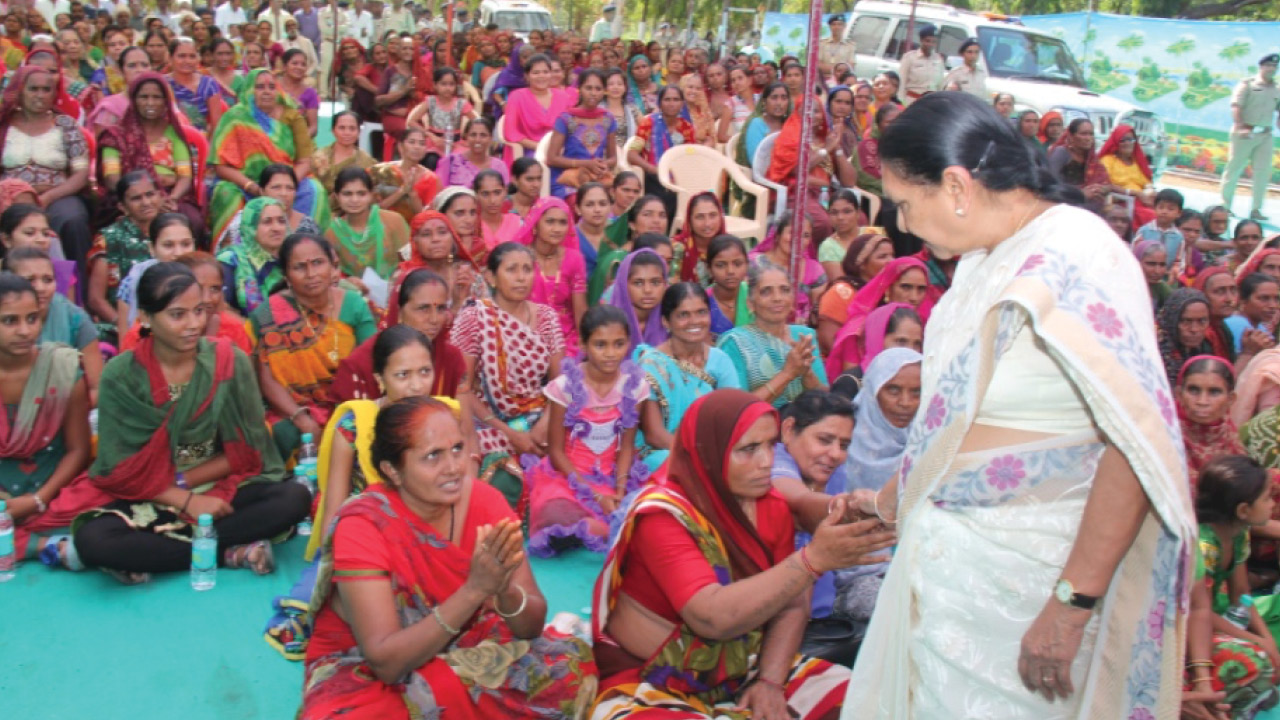
The district team coordinated with local elders and women to build trust and ensure participation. Dialogue sessions with Maldhari women were facilitated by senior officials, including the Chief Minister of Gujarat, who personally visited the forest settlements and interacted with residents.
Solutions Implemented
A thorough enumeration of all eligible households was carried out. Benefits were then delivered through mobile teams and temporary camps set up inside the forest. Services included Aadhaar enrolment, ration card issuance, pension registration, insurance enrolment, voter ID distribution, and access to various welfare schemes such as the Mukhya Mantri Amrutam Yojana and Mission Mangalam. The campaign culminated in a large public event held in the forest on 11 June 2015 where 1,439 individual benefits were distributed across schemes.
Details of the Coverage
The project covered all 27 nesses in the Gir West Forest division, reaching 2048 individuals including 141 families and a livestock population of 8030. The campaign ensured the issuance of 54 Aadhaar cards, 20 ration cards, 576 benefits under MAA and Vatsalya Yojana, 150 insurance enrolments, and support under 12 other schemes.
Innovation and Unique Features
Samvedana’s strength lies in its convergence model. It is one of the few instances where multiple departments executed a coordinated campaign inside a legally protected forest within a tightly defined timeframe. The campaign bypassed conventional bureaucracy by taking services directly to the citizens, reversing the burden of travel and compliance.
- New Approaches: Tech integration, capacity building, culturally sensitive methods
- District teams adapted by creating time-tables based on cattle-grazing patterns to ensure beneficiaries were present. Mobile tech units and coordinated micro-planning across departments enabled real-time delivery. Officers lived on-site for several days to complete tasks, ensuring immersion and responsiveness.
- Co-creation: How tribal knowledge or leadership shaped the solution
- Dialogue with Maldhari women led to the simplification of processes and prioritisation of schemes such as maternal healthcare and nutrition. The plan was adapted based on feedback, such as ensuring early morning or late evening team visits to match the community’s cattle-grazing schedules.
Challenges Faced Before Implementation
Internal challenges included lack of baseline data and inter-departmental coordination. External challenges involved transportation into forest areas, securing legal clearance under the Forest Act, and gaining the trust of a socially insulated community.
The Collector led from the front, conducting field reviews, engaging directly with communities, and issuing forest permits in advance. Strategic micro-planning of team deployments and real-time review meetings helped overcome logistical constraints.
Outcomes
- Quantitative Results
- The campaign resulted in 1,439 benefits across schemes being delivered to 2048 individuals. This included issuance of identity documents, welfare assistance, insurance, healthcare access, and food security support.
- Primary beneficiaries were the 141 Maldhari families residing in Gir Forest. Secondary beneficiaries included local women’s groups (Sakhi Mandals), forest department staff, and health outreach personnel who developed better understanding of tribal engagement.
- Qualitative Results
- The project restored faith in governance among an otherwise excluded community. Residents who had never voted received voter IDs. Women engaged with the administration directly for the first time. The entire forest zone witnessed a surge in institutional coverage for health and civil documentation.
- Daily reviews were conducted at field locations. Department heads were required to report progress to the Collector. The project was evaluated for its ability to meet all pre-defined targets within the 31-day campaign window.