

Strengthening of Livelihoods of a Rural Tribal Farmer
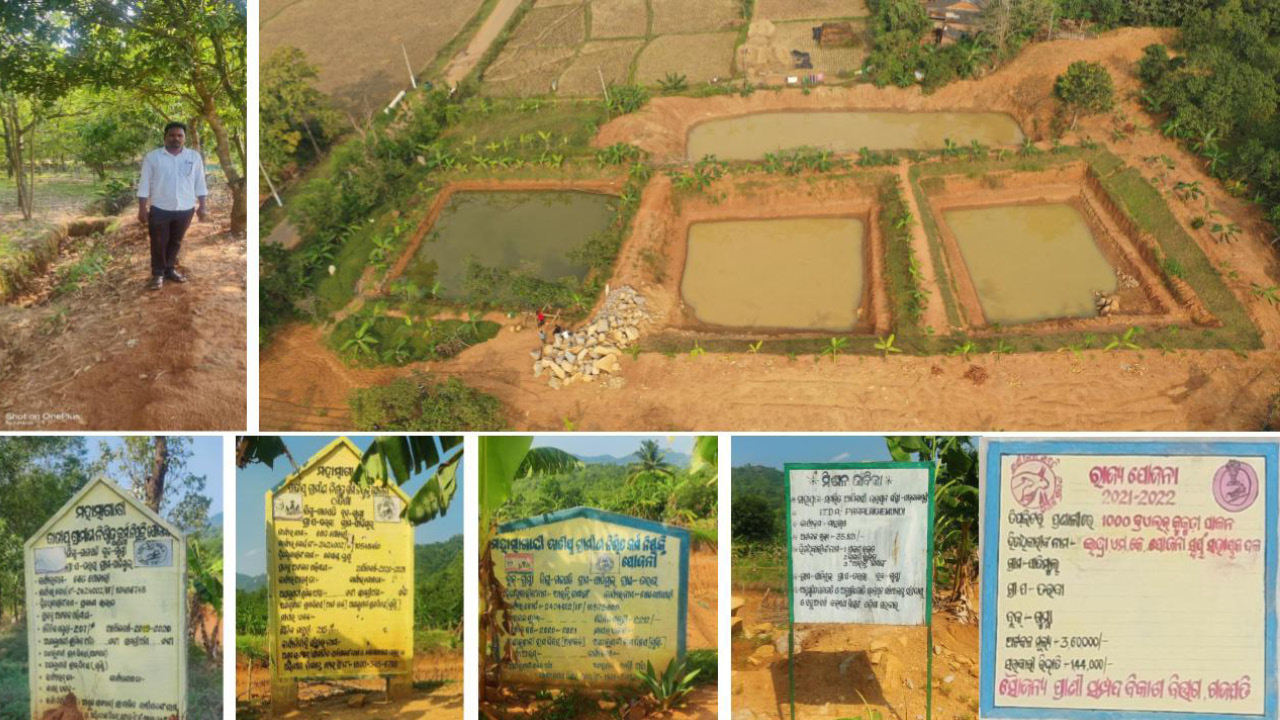
Strengthening of Livelihoods of a Rural Tribal Farmer
Problem
- Eradication of Migration to other states in search of jobs
- Strengthening the livelihood of poor rural tribal farmers
- Augmentation in income sources for a smoother lifestyle
- Motivation for the agriculture sector by adopting modern technologies
Solution
- Excavation of cluster farm ponds under the MGNREGS scheme in tribal-dominated hilly areas to tackle water scarcity
- Awareness creation among farm pond beneficiaries for adopting Integrated Farming Practices for income augmentation
- Market linkage of farm produces such as vegetables, fish, chicken, ducks, and others
Outcomes
- Strengthened livelihoods of poor tribal farmers
- Increased and diversified income sources
- Reduced migration of farmers to other states in search of jobs
- Greater interest in agricultural activities through the adoption of modern farming practices
- Convergence of different schemes of various departments for a holistic approach
Project Details
Category: Odisha
Project Title: Strengthening of Livelihoods of a Rural Tribal Farmer
Department or District: Soil Conservation and Watershed Development Department
State: Odisha
Start Date of the Project: 2023
Website: https://water.rajasthan.gov.in/wdsc/
Tribe(s) that the Project Covers: The project primarily benefits tribal communities residing in Gumma Block of Gajapati district, Odisha, where tribal populations such as the Saora and Kondh are predominant.
Keywords: Tribal Farming, Integrated Farming System, Farm Pond, Tribal Livelihoods, Soil Conservation, Micro Watershed, Migration Control, Convergence Model, Sustainable Agriculture, Rural Development, Income Augmentation
Odisha’s hilly tribal belts have long suffered from economic backwardness, poor irrigation, and rampant migration. With farming mostly rain-dependent and practiced only during monsoons, the livelihoods of smallholder tribal farmers have remained fragile. Recognizing this systemic vulnerability, the Soil Conservation and Watershed Development Department, Government of Odisha, initiated an integrated intervention in the Gumma Block of Gajapati district. This focused approach aimed to rejuvenate barren farmlands and strengthen the income base of tribal households through simple, scalable water conservation and integrated farming models.
The Project
The project centers on constructing farm ponds on small, fragmented plots in hilly terrains to conserve rainwater. This stored water enables year-round farming and diversification into allied sectors such as poultry, fisheries, and horticulture. It creates an ecosystem of integrated farming that not only boosts productivity but also uplifts the socio-economic status of tribal communities. The convergence of multiple departmental schemes ensures holistic development support, from infrastructure to market access.
Problems that it Intends to Solve
The region’s agriculture was mono-cropped, with paddy cultivated only during the rainy season, leaving fields fallow for most of the year. Annual income from farming was often limited to ₹1500. Lack of irrigation, poor economic viability, and high rates of youth migration marked the rural tribal life. Moreover, interest in farming was waning, especially among the younger generation, who found agriculture unviable and unprofitable.
What was the Need
The urgency to act arose from persistent rural distress in tribal belts where traditional farming models failed to ensure livelihood security. The absence of irrigation infrastructure, poor market access, and limited technical guidance necessitated a shift toward sustainable, integrated farming methods. The objective was to empower farmers to use their small landholdings efficiently while also retaining ecological balance through soil and water conservation.
What Hindered its Introduction
Initial resistance from the community was palpable. The rugged topography and patchy landholdings made the concept of excavating ponds seem unrealistic to many smallholders. Additionally, there was a general reluctance rooted in a lack of exposure to modern farming methods. Mobilizing labor in remote tribal regions and convincing farmers to spare cultivable land for water structures posed further hurdles.
Process Followed for Implementation
The project began with awareness drives to educate farmers about the benefits of farm ponds and integrated farming systems (IFS). Farm ponds were excavated in clusters to optimize impact. Simultaneously, technical support for modern irrigation techniques like drip and sprinkler systems was provided. Departments including Horticulture, Agriculture, Fisheries, Veterinary Services, and ITDA were brought together to pool resources and expertise. This cross-sectoral collaboration ensured support for bund plantations, poultry farming, vegetable cultivation, and fishery—all under one umbrella.
Government departments led the planning, funding, and technical facilitation. Community involvement was key to the success of the initiative, as farmers themselves undertook excavation, maintenance, and operational decisions. While NGOs were not directly involved, convergence of multiple public schemes created a decentralized and participatory governance model that encouraged local ownership.
Solutions Implemented
A total of around 200 farm ponds have been excavated over two years. Farmers were guided to adopt integrated farming by combining crop cultivation with poultry, duckery, and aquaculture. Market linkages were created to ensure that the produce—vegetables, fish, poultry, and fruits—could fetch remunerative prices. Departmental convergence ensured inputs, seedlings, livestock, and technical training were readily available.
Details of the Coverage
The project has touched hundreds of tribal households in Gumma Block. With each farm pond benefiting at least one family directly and others through knowledge spillover and labor opportunities, the initiative has had a cascading effect. In addition to the 200 individual ponds, four larger cluster ponds were constructed, facilitating shared irrigation and fishery ventures.
Innovation and Unique Features
The project’s uniqueness lies in its contextual adaptation of modern techniques to traditional settings. Introducing integrated farming practices in tribal hilly terrain, combined with convergence-based planning, was an innovation in itself. Technologies like drip and sprinkler irrigation enabled efficient water use. The promotion of fishery and poultry in water-stressed areas added new livelihood dimensions.
- New Approaches: Tech integration, capacity building, culturally sensitive methods
- Capacity building through field demonstrations and peer-to-peer learning became the cornerstone of adoption. Tribal farmers’ traditional understanding of land and weather cycles was incorporated into planning schedules. The community’s knowledge shaped localized irrigation designs and cropping patterns. As a result, many farmers began independently adopting these practices.
- Any adaptations: How the project evolved during implementation
- The project strategy evolved to respond to terrain-based constraints. While initial plans aimed at individual ponds, grouped cluster ponds proved more viable in steep locations. Labor shortages during the excavation phase were addressed through flexible scheduling and incentivization.
Challenges Faced Before Implementation
- The lack of trained school staff, absence of a monitoring cell, and limited departmental coordination led to inefficiencies. School authorities found it difficult to cope with verification workloads alongside academic duties.
- Inaccessibility of banking services, poor awareness among parents, and delays in Aadhaar updates created bottlenecks. Girls were especially affected due to social norms and lack of awareness among families.
- Regular training, establishment of a Scholarship Cell, onsite Aadhaar and banking services, and targeted outreach in vulnerable communities helped resolve most initial challenges.
Challenges Faced During Implementation
Key internal challenges included resistance from farmers due to small landholdings and the fear of losing arable space. Externally, the steep and uneven terrain made excavation and water storage structurally complex. Labor scarcity posed logistical challenges. These issues were addressed through intensive IEC campaigns, community mobilization, and the provision of on-site technical support.
Outcomes
- Quantitatively, the income of participating farmers rose from a meager ₹1500 annually to nearly ₹90,000 due to the adoption of diversified farming practices. Qualitatively, the project helped eliminate distress migration and restored dignity in agricultural livelihoods. There was a notable revival of interest among tribal youth to engage in farming as a sustainable and profitable profession.
- The project’s performance is being monitored through periodic field reviews by departmental officials and impact assessments conducted at the block level. Success stories are being documented to facilitate replication in other regions.
- Hundreds of tribal families in the Gumma Block have directly benefited. The multiplier effect has influenced neighboring farmers, many of whom have adopted similar models voluntarily.
Replicability / Scalability / Sustainability
The project’s success has set a precedent for other tribal-dominated districts in Odisha and beyond. Its sustainability is ensured through community ownership and minimal recurring expenditure. With financial viability demonstrated, the model is being integrated into state-level watershed and tribal development policies. There is high potential for replication across similar geographies.