State Academic Monitoring Unit
State Academic Monitoring Unit
Problem
- The lack of a centralised academic monitoring mechanism led to inconsistent academic results
- Synchronising academic calendars and practices with the School Education Department
- Improvement needed in board exam results, including pass percentages and grades
- Limited long-term preparation for national exams such as IIT-JEE and NEET
- Monitoring academic performance was difficult across tribal institutions with diverse socio-cultural backgrounds
Solution
- The State Academic Monitoring Unit established in September 2024
- SAMU centrally plans, coordinates and monitors all academic activities across APTWREIS institutions.
- Experienced serving or retired subject experts are deployed as academic coordinators
- Design and implementation of minimum learning materials and enhancement programmes
- Coordinate with the School Education Department, SCERT and Samagra Shiksha to align with RTE
Outcomes
- 1.6 lakh ST students brought under structured, centralised academic monitoring
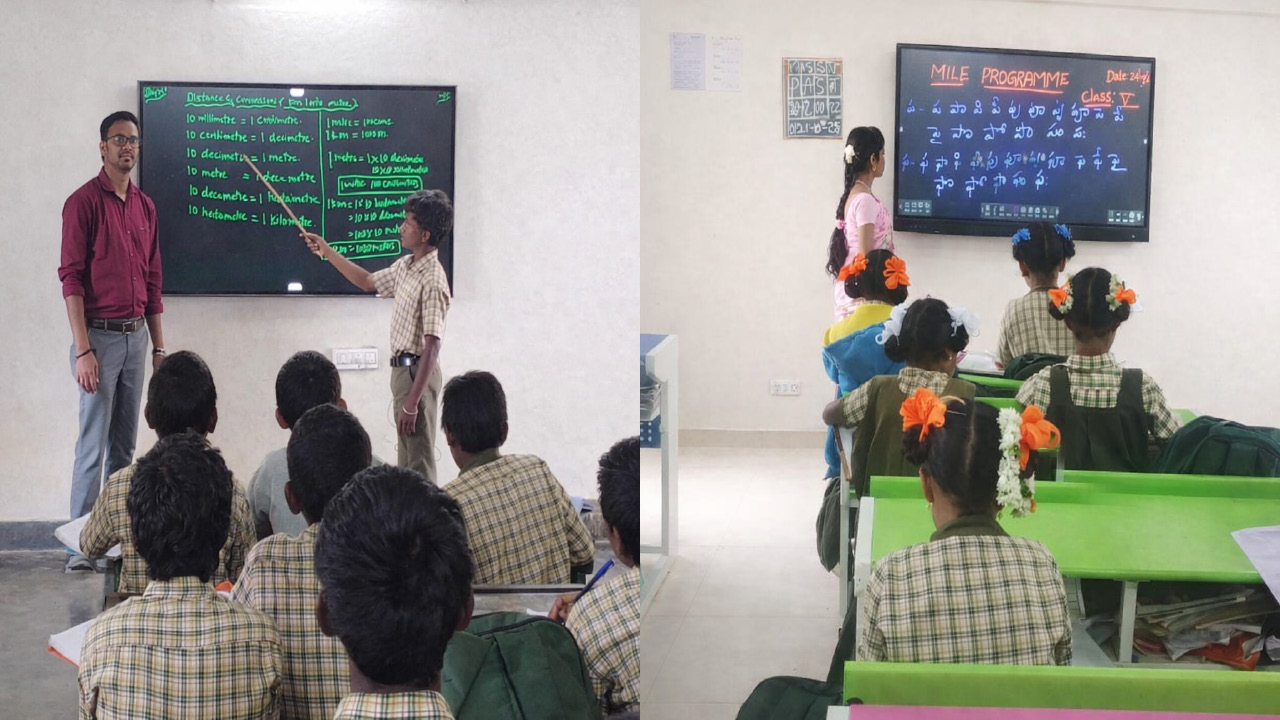
- 33,435 tribal students (Classes III-X) benefited from the 40-day MiLE intervention across 139 Gurukulam institutions
- 52.33% of C-grade students upgraded to B or A grade through structured remedial mechanisms
- 150 top-performing students trained in 4 Special Coaching Centres and 1,559 Intermediate students received national-level competitive exam coaching
- Continuous academic supervision supported by regular assessments and performance analysis
Project Details
Category: Education
Project Title: State Academic Monitoring Unit
Department or District: AP Tribal Welfare Residential Educational Institutions Society (APTWREIS – Gurukulam)
State: Andhra Pradesh
Start Date of the Project: 23 September 2024
Website: https://aptwreis.apcfss.in/
Tribe(s) that the Project Covers: SAMU covers Scheduled Tribe students in APTWREIS-managed institutions, including Gurukulams, Ashram Schools, EMRS, Residential Schools and hostels across Andhra Pradesh. The beneficiary tribes include Koya, Konda Reddy (PVTG), Savara (Soura), Jatapu, Gadaba, Konda Dora, Valmiki, Bagata, Porja, Kotia, Chenchu (PVTG), Yanadi (PVTG in some classifications) and Lambada (Banjara) communities. These tribes are concentrated in districts such as Alluri Sitharama Raju, Parvathipuram Manyam, Eluru, Nandyal (Srisailam belt), Anakapalli and adjoining tribal areas
Keywords: State Academic Monitoring Unit, APTWREIS, Education Reform, MiLE Programme, Minimum Learning Enhancement, Centralised Academic Governance, Foundational Literacy & Numeracy, IIT-JEE & NEET Coaching, Residential School Reform, Data-Driven Monitoring
SAMU, set up on 23 September 2024 by APTWREIS, aims to improve academic governance and learning outcomes in Andhra Pradesh’s tribal residential institutions. These schools serve Scheduled Tribe students from remote areas with linguistic, cultural and economic challenges.
Prior to SAMU, academic planning and supervision were largely decentralised, resulting in uneven academic outcomes, inconsistent implementation of the academic calendar and variable board examination performance. There was also a need to align institutional functioning more closely with the School Education Department, SCERT and Samagra Shiksha, ensuring compliance with RTE norms while responding to the specific learning needs of tribal students.
SAMU is a centralised academic oversight body offering structured planning, monitoring and targeted interventions for all APTWREIS institutions.
The Project
SAMU functions as a state-level academic command and coordination unit operating under the supervision of the Secretary, Gurukulam, with operational leadership provided by the Deputy Secretary (Academics). Subject-wise coordinators, drawn from serving and retired educators with at least 10 years of teaching experience, were appointed to ensure subject expertise and continuity in monitoring.
The project synchronises academic calendars, aims for 100% Class X and Intermediate pass rates with top grades and prepares students for national exams like IIT-JEE and NEET. Academic monitoring covers 199 institutions, overseeing teaching, assessments and exam readiness.
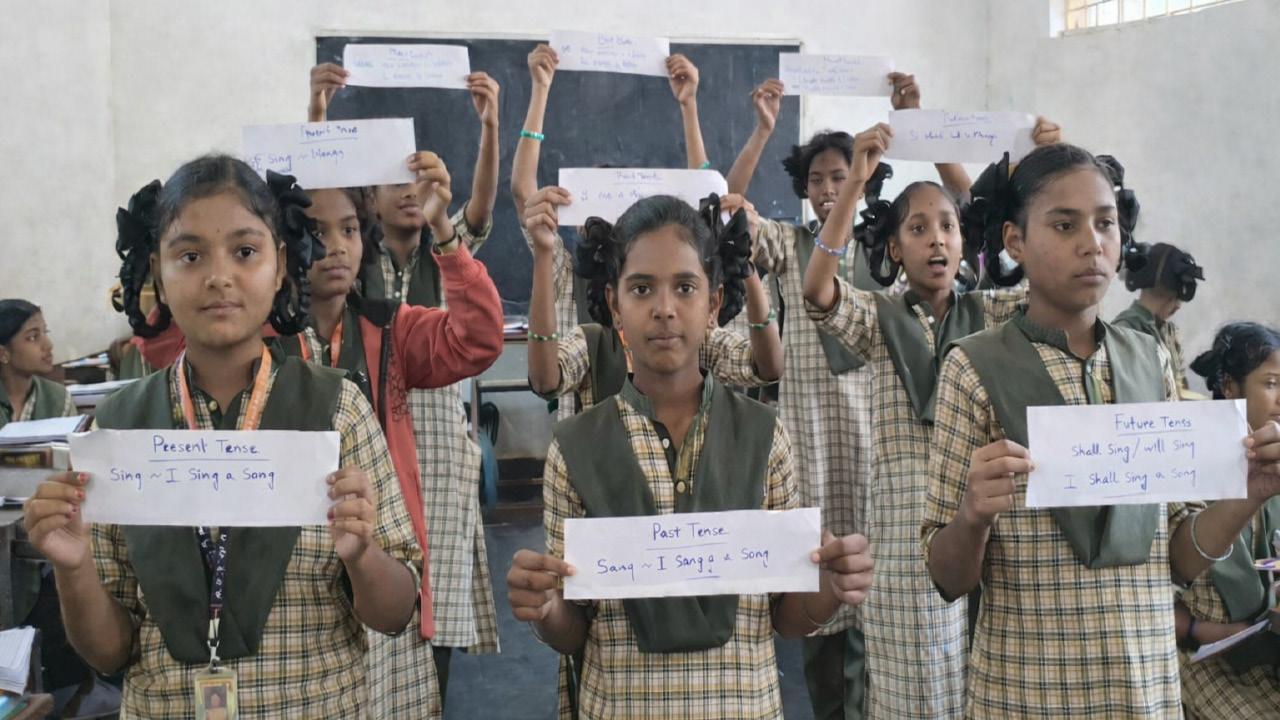
A flagship component of SAMU is the Minimum Learning Enhancement (MiLE) Programme, designed to address foundational learning gaps from Classes III to X.
Problems that it Intends to Solve
Centralised academic monitoring helps standardise calendars and exam results. Many tribal students have learning gaps in language and math, which lowers confidence and achievement.
Baseline assessments conducted in 16 Gurukulam institutions in ASR District, covering 1,257 Class X students, revealed cumulative foundational gaps from Class III to X. These deficits could not be addressed solely through short-term remedial teaching. Additionally, limited structured preparation for competitive examinations restricted access to premier institutions for tribal students.
Need and Rationale
Quality education in tribal residential institutions requires uniform standards, consistent monitoring and expert academic support. Given the vast geographical spread of institutions and the socio-cultural diversity of tribal communities, decentralised academic supervision proved insufficient.
A centralised mechanism was needed to align academic activities and strengthen basics as well as exam readiness. SAMU was created to fill this gap.
Implementation Process
SAMU’s implementation began with the establishment of a dedicated academic monitoring structure at the state level. Subject coordinators prepared minimum learning materials aligned with updated syllabi, developed workbooks and model papers and conducted baseline assessments to identify performance gaps.
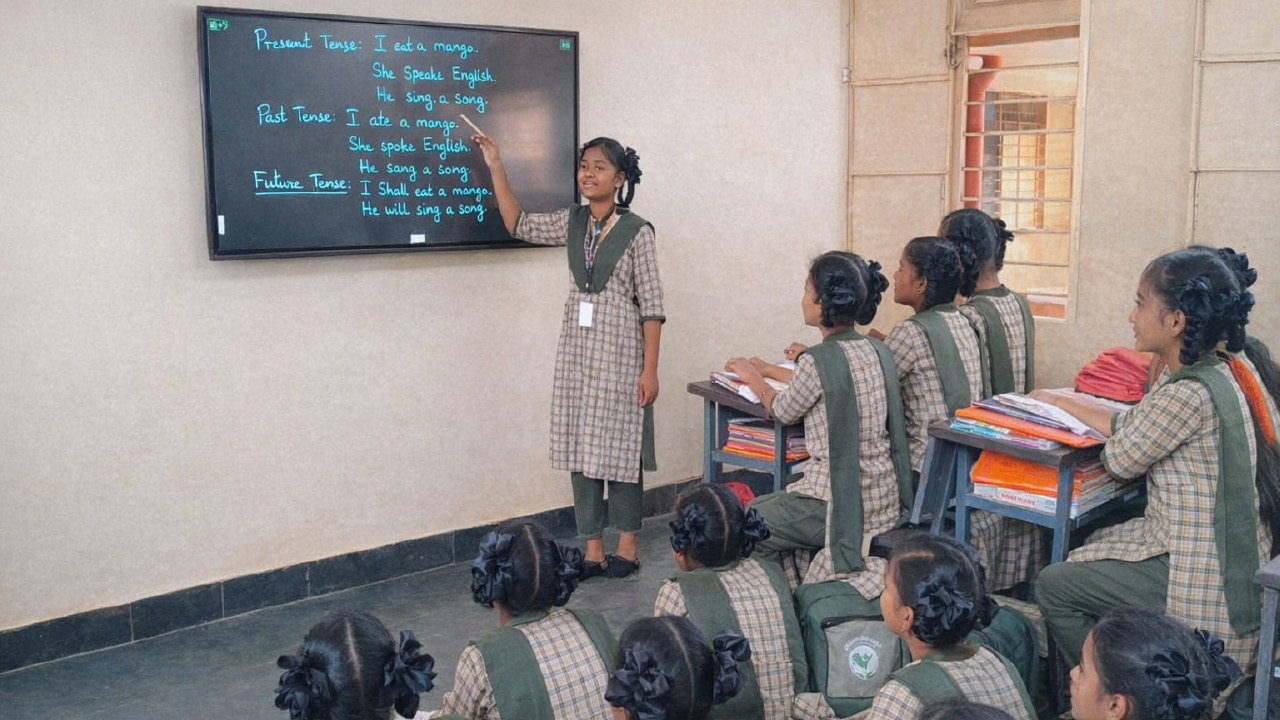
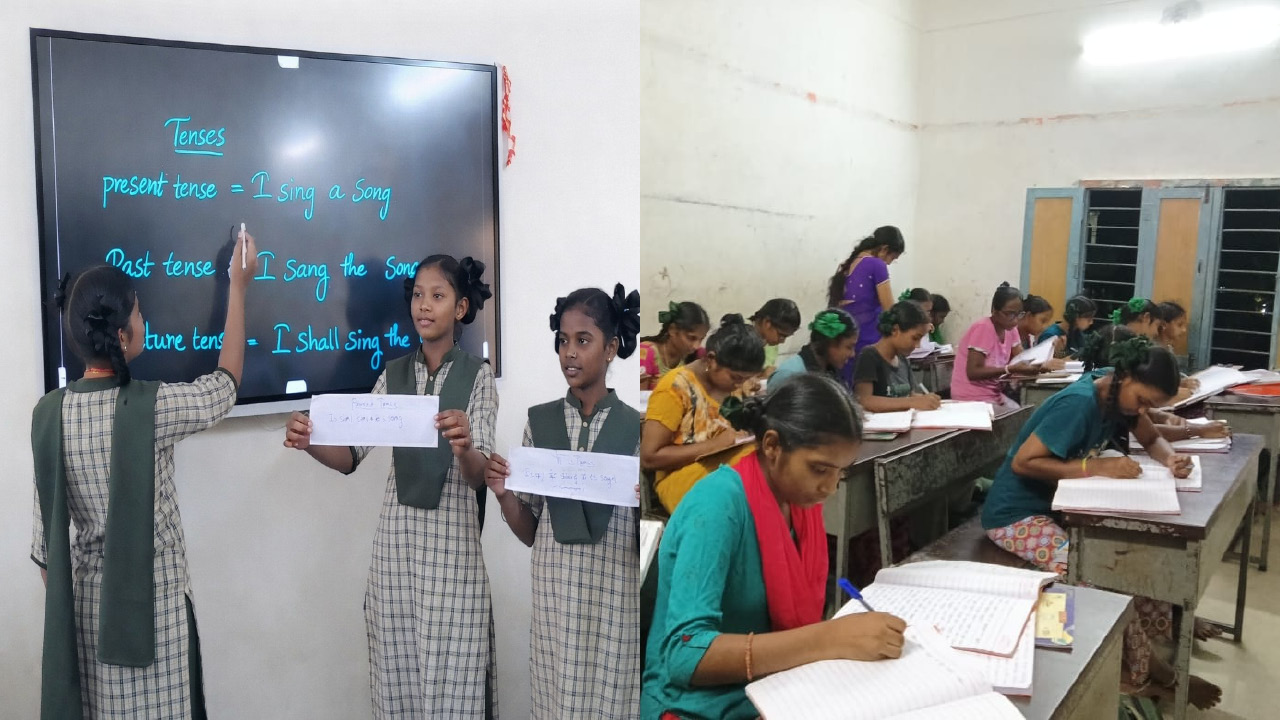
The MiLE Programme was piloted in the ASR District and subsequently scaled across 139 Gurukulam institutions from October to December 2025, covering 33,435 tribal students. Designed as a 40-day structured intervention, MiLE focused on strengthening foundational competencies in languages and mathematics. The programme adopted the RIDC methodology – Recitation, Imposition, Dictation and Correction and categorised students into A, B and C groups to enable differentiated instruction.
Daily progress was monitored through reports. Principals supervised locally; SAMU gave ongoing feedback and corrections. MiLE notebooks recorded student progress.
In parallel with foundational strengthening, SAMU established four Special Coaching Centres to prepare 150 high-performing students for JEE and NEET. Special coaching was extended to 1,559 Intermediate students across EMRS and Schools of Excellence. Certificate courses in Artificial Intelligence and Data Science and free CA coaching for commerce students were also organised in collaboration with reputed institutions.
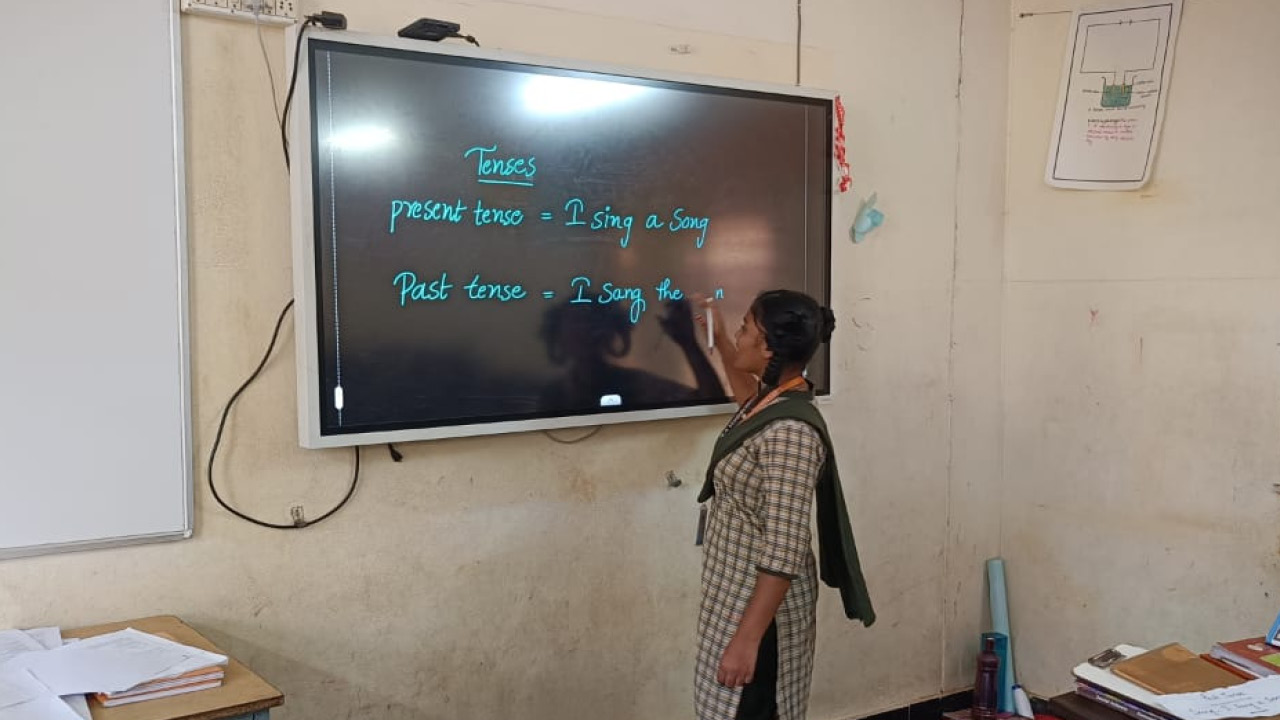
Technology-enabled online teaching platforms supplemented classroom instruction, extending the reach of experts to remote institutions.
Solutions Implemented
SAMU’s changes restructured tribal education management, unifying practices across schools. All planning, materials, assessments and monitoring now align centrally for consistent results.
Coordinators created Minimum Learning Materials aligned with the updated syllabi, focusing on concepts, language and numeracy. Workbooks, model papers and exercises ensured standard quality in all institutions.
The MiLE Programme acted as a targeted structural intervention, not mere supplemental coaching. It’s a focused, 40-day schedule that delivers concentrated academic reinforcement. The RIDC method – Recitation, Imposition, Dictation and Correction – offered structured repetition and immediate feedback. Student groups A, B and C enabled tailored teaching without disrupting cohesion.
Another significant solution was the introduction of baseline assessments for Class X and Intermediate students to identify performance gaps before board examinations. These diagnostic assessments enabled coordinators to design targeted remedial interventions rather than rely on generic revision strategies. Continuous academic supervision through periodic examinations and progress tracking ensured that performance improvement was monitored in real time.
To address aspirational academic mobility, SAMU established Special Coaching Centres for high-performing students preparing for national-level competitive examinations such as IIT-JEE and NEET. Structured foundation training programmes were implemented to provide long-term preparation rather than last-minute exam coaching. Special coaching in EMRS institutions and Schools of Excellence further expanded the solution framework to include Intermediate students seeking admission to premier institutions.
Technology integration formed another important solution component. Online teaching platforms were introduced to supplement classroom instruction, enabling expert faculty guidance to reach remote institutions. This reduced disparities in subject delivery and ensured consistency in specialised academic inputs.
Capacity strengthening of teachers and institutional heads was embedded within the solution architecture. Principals were made responsible for daily monitoring and adherence to structured schedules, while SAMU coordinators provided guidance, feedback and corrective recommendations. This dual-layer monitoring mechanism ensured both central oversight and local accountability.
The integration of advanced enrichment initiatives, such as Certificate Courses in Artificial Intelligence and Data Science and free CA coaching for commerce students, broadened the scope of the solution beyond conventional board-focused education. These interventions introduced students to emerging domains and professional pathways, enhancing their aspirations and career orientation.
Collectively, the solutions implemented under SAMU reflect a comprehensive academic reform ecosystem. By combining foundational strengthening, competitive exam preparation, technology integration, structured monitoring and enrichment programmes within a single governance framework, the initiative ensures that tribal residential education moves from reactive remediation to sustained, system-wide academic excellence.
Details of the Coverage
SAMU monitors 199 institutions and directly targets 52,000 enrolled students within APTWREIS. The MiLE Programme covered 139 institutions and 33,435 students across Classes III to X during the scale-up phase. The broader monitoring framework benefits approximately 1.6 lakh ST students across Tribal Welfare institutions.
Innovation and Unique Features
The State Academic Monitoring Unit (SAMU), established on 23.09.2024, represents a structural innovation in tribal education governance by institutionalising a centralised, state-level academic oversight system for residential tribal institutions. Unlike traditional decentralised academic supervision models, SAMU consolidates planning, monitoring, assessment and remedial strategy design at the state level while ensuring uniform implementation across institutions. This centralisation directly addresses inconsistencies in academic calendars, pedagogical practices and examination outcomes that previously existed across geographically dispersed institutions.
One of the most significant innovations under SAMU is the design and implementation of the Minimum Learning Enhancement (MiLE) Programme. MiLE has emerged from a data-driven diagnosis of learning deficits revealed through baseline assessments in 16 Gurukulam institutions in ASR District, where 1,257 Class X students demonstrated cumulative foundational gaps from Classes III to X. Rather than focusing solely on examination-oriented coaching, MiLE addressed root-level deficiencies in reading, writing and numeracy. The 40-day structured intervention, implemented uniformly across 139 Gurukulam institutions and benefiting 33,435 tribal students, was integrated into the regular academic schedule without disrupting curricular continuity. This integration of remedial reform within mainstream schooling marks a systemic innovation rather than a parallel programme.
MiLE’s pedagogical design introduces methodological innovation through the RIDC framework, Recitation, Imposition, Dictation and Correction, which ensures disciplined, repetitive and outcome-oriented learning processes. Students are categorised into A, B and C levels, enabling differentiated instruction and targeted academic support. This structured categorisation allows teachers to tailor interventions without stigmatising lower-performing students, thereby combining equity with performance enhancement.
SAMU also innovates through its deployment model. Subject-wise coordinators, selected from serving and retired experts with a minimum of ten years of teaching experience, provide domain-specific supervision and continuity. Their mandate includes preparing minimum learning materials, workbooks, model papers and continuous assessment tools. This expert-driven academic governance ensures that teaching quality is not left solely to individual institutional capacity but is supported by centralised intellectual leadership.
The integration of technology-enabled online teaching platforms further strengthens SAMU’s innovation profile. Digital platforms extend expert reach to remote institutions, reduce disparities in subject delivery and provide supplemental academic support, particularly in specialised areas such as IIT-JEE and NEET preparation. Additionally, collaborations for certificate courses in Artificial Intelligence and Data Science and free CA coaching in partnership with reputed institutions reflect forward-looking curriculum expansion beyond standard board syllabi.
Another distinctive feature is SAMU’s alignment with policy frameworks such as RTE norms and coordination with the School Education Department, SCERT and Samagra Shiksha. By synchronising the academic calendar and pedagogical standards with state-level education systems, SAMU ensures that tribal institutions are not academically isolated but integrated into mainstream academic benchmarks.
Finally, the scale of coverage itself constitutes an innovation in governance. The MiLE has statewide coverage benefiting approximately 1.6 lakh ST students across Tribal Welfare and Gurukulam institutions. Achieving uniform academic reform at this scale across remote, culturally diverse tribal regions demonstrates systemic innovation in educational administration.
Challenges Faced
While the State Academic Monitoring Unit (SAMU) has established a structured academic reform framework, implementing it across tribal residential institutions has posed complex, multi-layered challenges that extend beyond conventional educational administration.
One of the foremost challenges was geographic dispersion. APTWREIS institutions are located across remote, forested and interior tribal belts of Andhra Pradesh, where transportation, connectivity and access to academic resources are limited. Ensuring uniform implementation of centrally designed academic schedules, assessments and interventions across 199 institutions required sustained coordination, regular communication and robust supervisory mechanisms. Physical monitoring visits were time-intensive and reliance on digital platforms was sometimes constrained by inconsistent internet connectivity in remote areas.
Language diversity posed another significant barrier. Tribal students come from varied linguistic backgrounds, with multiple dialects and local languages spoken across sub-tribes. Delivering standardised learning materials in a manner that was accessible and culturally contextualised required careful adaptation. Foundational gaps in reading and writing were compounded by differences between the home language and the medium of instruction, particularly affecting early-grade learners addressed under the MiLE Programme.
Cultural diversity and socio-economic realities also influenced implementation. Tribal communities across districts exhibit distinct customs, learning environments and educational exposure levels. Many students are first-generation learners and parental illiteracy limits academic support at home. This necessitated a school-based intensive intervention model where institutions themselves became the primary centres of academic reinforcement.
Another challenge was bridging cumulative learning deficits that had accumulated over several academic years. The baseline assessment in ASR District revealed that gaps were not confined to a single grade but extended from Classes III to X. Designing a 40-day structured intervention capable of addressing multi-year foundational weaknesses within a limited time required meticulous planning and disciplined execution.
Balancing foundational strengthening with aspirational coaching also required strategic calibration. While there was pressure to improve board examination pass percentages and competitive exam outcomes , it was equally necessary to avoid overburdening students and teachers. Integrating MiLE, Special Coaching Centres, AI and Data Science certificate courses and regular curriculum delivery without academic fatigue required careful scheduling and monitoring.
Teacher capacity and adaptation to structured monitoring systems added to the operational complexity. Transitioning from decentralised academic autonomy to a centralised, assessment-driven monitoring model required mindset shifts among educators. Ensuring timely reporting, adherence to schedules and accountability mechanisms across all institutions required continuous engagement from SAMU coordinators.
Despite these challenges, sustained leadership oversight, structured reporting systems, differentiated instructional design and regular feedback loops enabled progressive stabilisation of the reform. The experience demonstrates that educational transformation in tribal contexts requires not only academic innovation but also socio-cultural sensitivity, logistical resilience and sustained institutional commitment.
Outcomes
The MiLE Programme has generated measurable academic gains. As documented, 52.3 percent of C-grade students improved to either a B or an A grade following the structured 40-day intervention. Significant enhancement was observed in reading fluency, writing skills, spelling accuracy and numeracy fundamentals. Principals reported 100 percent academic upliftment alongside improved classroom discipline and learning engagement. These results demonstrate that foundational gaps accumulated over multiple years can be effectively bridged through structured, monitored interventions.
SAMU’s impact extends beyond foundational literacy. The establishment of four Special Coaching Centres for 150 high-performing students has strengthened preparation for All India Entrance Examinations such as JEE and NEET. Additionally, special coaching programmes in EMRS Schools and Schools of Excellence covered 1,559 Intermediate students seeking admission into premier institutions. This indicates a transition from mere pass-percentage improvement to aspirational academic mobility.
The systematic preparation of minimum learning materials and enhancement programmes has improved board examination readiness for Class X and Intermediate students. The programme’s focus on achieving a 100 percent pass rate with the maximum A1 grades has strengthened academic discipline and institutional accountability.
Behavioural and cultural outcomes are equally significant. The structured academic routine has fostered a positive learning culture within Gurukulam institutions, particularly in contexts marked by language barriers, cultural diversity and parental illiteracy. At a governance level, SAMU has created a replicable administrative template for residential and welfare-based school systems.