Gutu Galaang Kalyaan Trust: A Micro-Enterprise Model by PVTG Women in Jharkhand
Gutu Galaang Kalyaan Trust: A Micro-Enterprise Model by PVTG Women in Jharkhand
Problem
- Increasing poverty in PVTG community
- Lack of support and livelihood opportunities
- No avenues of direct employment by the vulnerable community
- Lack of women empowerment
- Absence of skill development programmes and lack of entrepreneurship
- Many of PVTG community unable to cultivate Lobia due to unavailability of seed
- Some of PVTG farmers got loan from the local moneylenders to cultivate Lobia
- Farmers were unable to get proper rate of their produce
- Day to day price hike of raw material and transportation of produce became a challenge
Solution
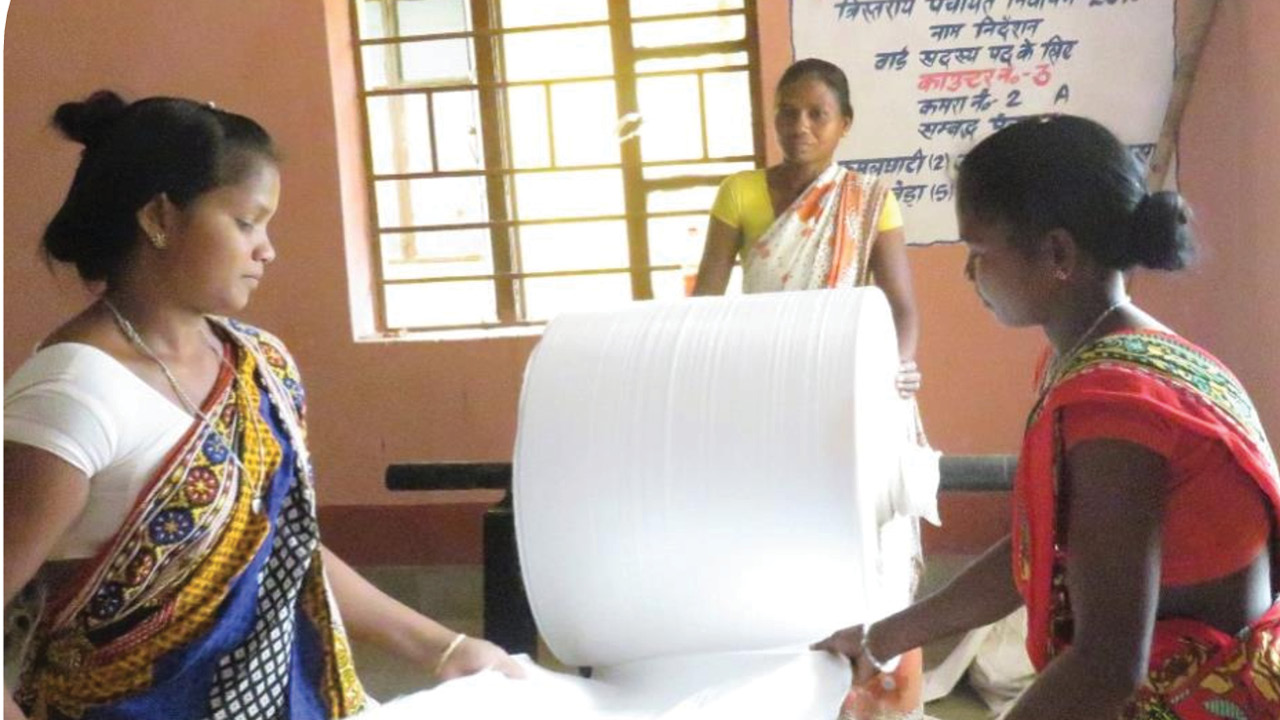
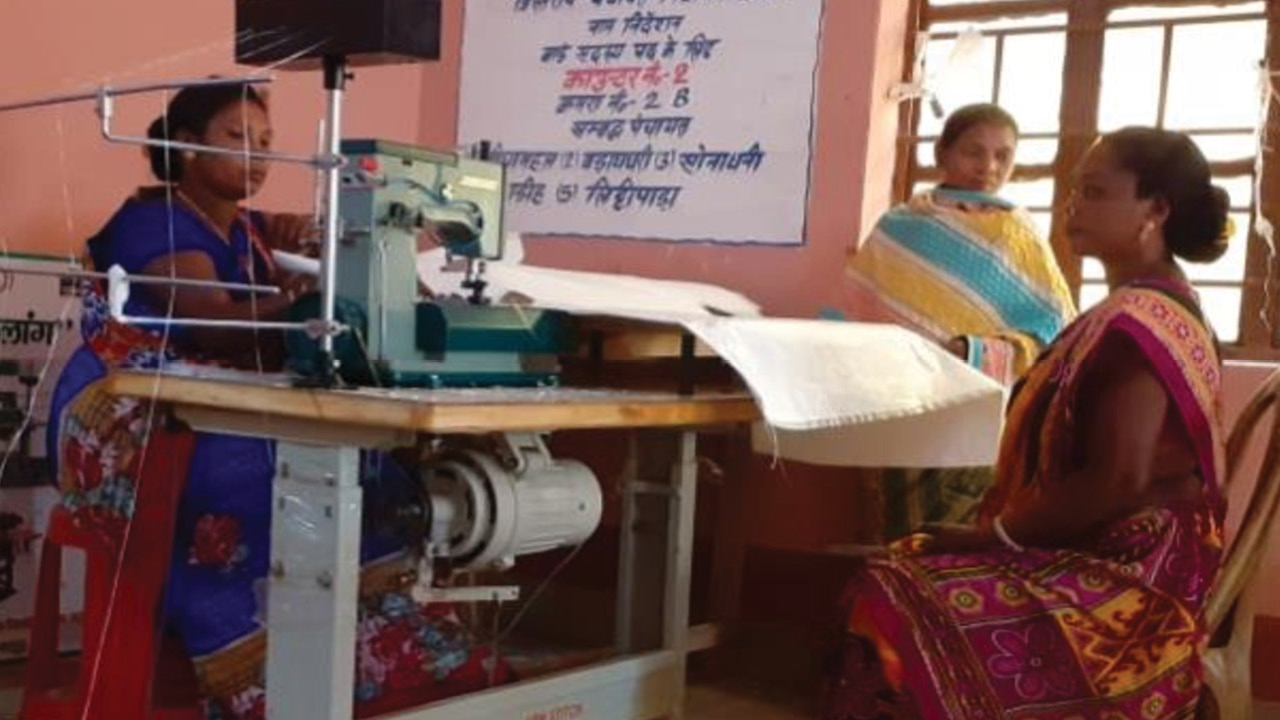
- Establishment of rice bag manufacturing unit
- Value added marketing platform – sorting, grading, packaging & branding
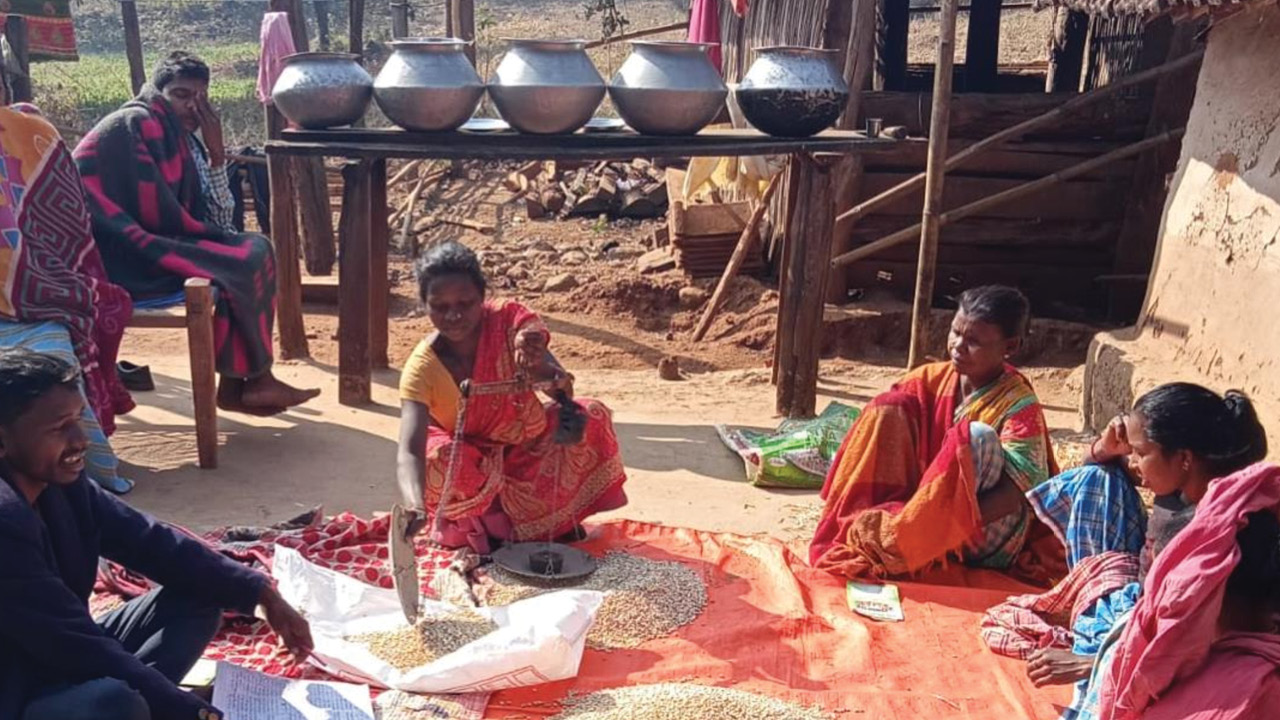
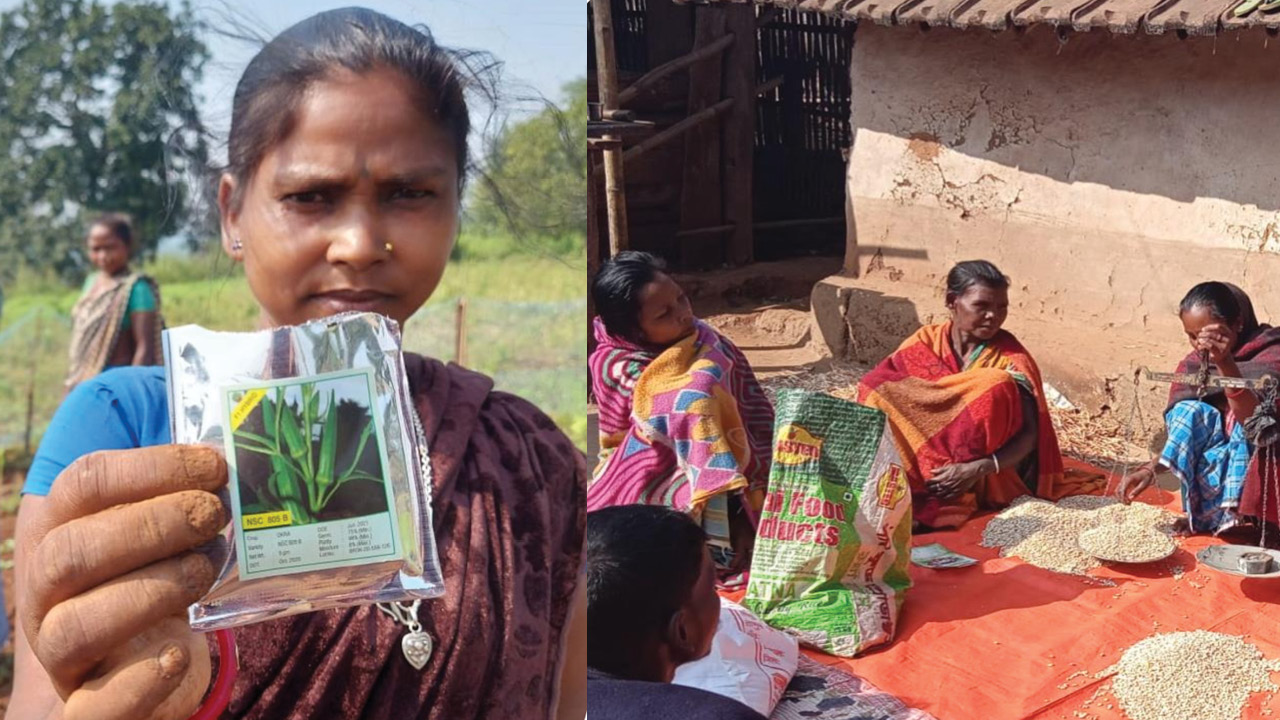
- Establishment of seed bank – Lobia (black eyed pea)
- Establishment of processing unit of Lobia, Bajra (millet) and pulses
- Registered vendor under MGNREGS – Supply of various planting materials to the targeted community
- Promotion of traditional seed practice
- Seed Bank and processing of traditional grain Lobia and Bajra and marketing through Palash Brand
- MGNREGA Pakur District Administration to serve better MGNREGA services to the vulnerable community
- Establishment of organic food processing unit (Daal Mill and Aata Mill)
Outcomes
- Rejuvenation of traditional and indigenous agriculture practices (Lobia & Bajra)
- Supply of around 900,000 pieces of rice sacks every year under PVTG Dakiya Scheme
- Annual turnover of the trust is around Rs 120 Lakh – started with Rs 4.5 lakh support from government
- Net profit of the Trust is Rs 21.51 lakh in two years, Rs 20.7 lakh GST paid
- Around 50 PVTG women are earning directly on regular basis – Rs 4,500/month
- 5,000 PVTG women farmers are benefitted through Lobia and Bajra cultivation
- Supply of 37,779 saplings of timber plants through convergence under MGNREGA
- Interference of middlemen reduced drastically
- Community is selling its product at market prices
Project Details
Category: Women Empowerment
Project Title: Gutu Galaang Kalyaan Trust – Sustainable Livelihoods through Bag Manufacturing and Traditional Agriculture by PVTG Women
Department or District: District Administration, Pakur (Jharkhand State Livelihood Promotion Society – JSLPS)
State: Jharkhand
Start Date of the Project: 13th December 2019
Website: https://jslps.in/
Tribe(s) that the Project Covers: The initiative primarily covers the Paharia community, a Particularly Vulnerable Tribal Group (PVTG) residing in the Littipara block of Pakur district in Jharkhand. The Paharias are among the most socioeconomically marginalized groups in India, living in remote and hilly regions of the Santhal Pargana division.
Keywords: PVTG, Dakiya Yojana, Tribal Entrepreneurship, Tribal Livelihoods, Natural Farming, Seed Bank, Tribal Empowerment, JSLPS, Farmer Producer Organisations (FPOs)
Pakur district in Jharkhand is home to approximately 12,600 PVTG households, many of whom face acute poverty, social exclusion, and limited access to sustainable livelihoods. To address these challenges, the district administration initiated a unique intervention to empower PVTG women through entrepreneurship, resulting in the formation of the Gutu Galaang Kalyaan Trust, a micro-enterprise that exemplifies self-reliance and local resource-based development.
The Project
Gutu Galaang Kalyaan Trust is a registered socio-micro-enterprise under the Indian Trust Act, 1861, managed and operated entirely by PVTG women. It was established to manufacture rice bags under the Dakiya Yojana, a state-run PDS scheme, while also promoting traditional farming practices and value addition in crops like lobia (cowpeas) and bajra (pearl millet). The Trust serves as a Farmer Producer Organisation (FPO), encouraging self-sufficiency and market access.
Problems that it Intends to Solve
The project addresses chronic poverty, limited livelihood opportunities, poor market linkages for forest produce, and exploitation by middlemen. Additionally, the Dakiya Yojana previously relied on external vendors, limiting benefits to the community.
What was the Need
There was an urgent need for an inclusive, community-run platform that could simultaneously provide employment, preserve traditional knowledge, and reduce economic exploitation. The lack of locally managed production and distribution channels exacerbated dependency and marginalisation.
What Hindered its Introduction
Initial challenges included identifying potential women entrepreneurs within the PVTG community, limited exposure to modern machinery, poor transport infrastructure, and procurement bottlenecks related to raw materials and working capital.
Process Followed for Implementation
The District Administration of Pakur, with support from JSLPS, played a central role in funding, training, and linking the Trust with departmental procurement systems. Training sessions were held at the Adani Skill Development Centre in Godda. The community contributed by forming the core management team and workers of the Trust, all drawn from the PVTG population. NGOs were not formally involved, but convergence with government schemes like MGNREGS supported plant material procurement and equipment deployment.
Solutions Implemented
The Trust established a rice bag stitching unit, a lobia and bajra processing facility, and a community seed bank. A system of seed loan and return created a sustainable seed cycle. Marketing was facilitated through the Palash brand, allowing farmers to earn 40% higher prices compared to traditional middlemen routes.
Details of the Coverage of the Implementation
The Trust supplies 900,000 rice bags annually to 22 districts in Jharkhand under the Dakiya Scheme, reaching 70,000 PVTG households monthly. Its agriculture outreach covers 7,500 PVTG farmers across 350 hectares, with 40 metric tons of seeds distributed and around 36 PVTG women employed full-time.
Innovation and Unique Features
It is the first registered PVTG women-led trust in the state with autonomous financial and managerial control. It promotes seed banking, natural farming, and value addition, all embedded within the cultural ecosystem of the community. Lobia cultivated in Santhal Pargana is being considered for a Geographical Indication (GI) tag.
- New Approaches: Tech integration, capacity building, culturally sensitive methods
- Technological integration includes training on electric stitching machines, real-time coordination for Dakiya Scheme supply, and processing units equipped with automated grading and packaging systems. The Trust also institutionalised a policy-based seed return model to support sustainable agriculture cycles.
- Co-creation: How tribal knowledge or leadership shaped the solution
- The entire model is designed and operated by the community. Tribal women like Ruby Malto and Bimli Paharin not only operate the machines but also train others and lead awareness campaigns. Traditional practices of seed saving and collective farming were adapted into the formal structure of the Trust.
Challenges Faced Before Implementation
Internally, the Trust struggled with management skills and confidence among first-time entrepreneurs. Externally, raw material cost inflation, delays in government payments, and the COVID-19 pandemic created severe disruptions.
Mitigation Efforts
Mentoring by JSLPS, government convergence, and internal leadership training helped overcome these obstacles. District-level administrative support ensured procurement under the Dakiya Yojana was prioritised.
Outcomes
- Quantitative
- The Trust has recorded an annual turnover of ₹1.2 crore, with ₹21.5 lakh in profits reinvested into the community. It has paid ₹20.7 lakh in GST and created full-time employment for 36 women while indirectly benefiting over 5,000 farmers.
- Qualitative
- Community self-reliance has improved. Women have transitioned from forest gatherers to skilled workers and entrepreneurs. Local narratives now include stories of leadership, independence, and financial inclusion.
- Progress is monitored by the District Administration, and regular audits ensure transparency. Performance metrics include bag supply consistency, farmer outreach, and reinvestment into livelihoods.
Beneficiaries
Direct beneficiaries include 36 women engaged in production and more than 7,500 farmers engaged in agriculture and seed banking. Indirectly, over 70,000 PVTG households across Jharkhand benefit from better service delivery under the Dakiya Scheme.
Replicability / Scalability / Sustainability
The model has already inspired similar efforts in Dumka and Sahebganj. Plans are in place to establish flour mills, daal units, and a flexographic printing unit for rice bags. A proposal is underway for forming a dedicated Farmer Producer Company under the Trust to scale across Jharkhand.