“Hunar Se Rojgar”; Empowering Women and Tribal Youth of Jharkhand Through Sustainable Employment Linked Skilling
“Hunar Se Rojgar”; Empowering Women and Tribal Youth of Jharkhand Through Sustainable Employment Linked Skilling
Problem
- Growing distance between the forest department and forest-dependent tribal communities
- Large-scale youth migration leading to loss of cultural roots and social disintegration
- Lack of employable and market-relevant skill sets among tribal youth
- Poverty-driven outmigration from a Left Wing Extremism affected areas
- Limited platforms to engage communities as partners in conservation
Solution
- Designed and implemented an employment-linked skilling programme
- Outreach and counselling through Gram Sabhas to mobilise participation
- Delivered 45-60 days of residential skill training on livelihoods
- Connected trained youth with employers nationwide
- Mobilised funds through government sources and CSR
Outcomes
- More than 350 tribal youth trained, certified and placed in jobs
- Creation of confident, skilled youth acting as conservation advocates
- Reduction in forced migration and increased community stability
- Strengthened voluntary community support reducing forest offences
- Formation of eco-clubs fostering peer support and conservation awareness
Project Details
Category: Employment
Project Title: “Hunar Se Rojgar”; Empowering Women and Tribal Youth of Jharkhand Through Sustainable Employment Linked Skilling
Department or District: Palamau Tiger Reserve
State: Jharkhand
Start Date of the Project: 23 January 2025
Website: https://www.palamautigerreserve.in/
Tribe(s) that the Project Covers: The project covers Scheduled Tribe communities in and around Palamau Tiger Reserve in Jharkhand. It includes primitive tribal groups such as Parahia and Asur. The initiative spans about 199 villages within the PTR landscape. It benefits tribal youth, women and forest-dependent families in Latehar and Garhwa districts.
Keywords: Employment-Linked Skilling, Tribal Youth, Women Livelihoods, Conservation Partnership, Participatory Forestry, Watershed Management, Pink Panther Initiative, LWE-Affected Region, Migration Control
Palamau Tiger Reserve (PTR) was established in 1973 under Project Tiger. As one of India’s earliest tiger reserves, it covers 1,144 sq. km in Jharkhand. The reserve harbours rich biodiversity and supports approximately 1.36 lakh people across 199 villages, many of whom are from Scheduled Tribe communities. Conservation in this diverse region remains closely connected to the livelihoods and cultural identity of forest-dependent communities.
This region is affected by Left-wing extremism. Poverty-driven migration and lack of employable skills are major issues. There is also a growing distance between the forest department and tribal communities. These create challenges for both conservation and development. The “Hunar Se Rojgar” initiative was created under the Jan Bhagidari Mission to address these issues. It shifts focus from protection-only forestry to partnership-based conservation.
The Project
“Hunar Se Rojgar” was launched on 23 January 2025 by Palamau Tiger Reserve. It is an employment-linked programme to empower tribal youth and women with market-relevant skills and rebuild trust between the forest department and local communities. The philosophy is that sustainable conservation relies on voluntary community support based on economic dignity.
The programme provides 45-60 days of residential training across multiple sectors, including computer skills, two-wheeler repair, light motor vehicle driving, stitching, beautician services, electrical and solar work, hospitality, watershed management, tourist eco-guiding and leaf composting. Training culminates in NSDQ certification and links with employers across the country, alongside support for local self-employment for those preferring to remain within the region.
Problems that it Intends to Solve
The project seeks to bridge the gap between the forest department and forest-dependent tribal communities living within the protected area. As many youth migrate due to poverty and limited opportunities, connections to cultural heritage erode and the fabric of community weakens.
Lack of relevant skills has limited access to dignified jobs, pushing tribal youth into low-wage manual labour in distant states. Without participatory engagement platforms, the forest department missed chances to build collaborative conservation partnerships.
Need and Rationale
Conservation in tiger reserves depends significantly on voluntary support from local communities who share a deep cultural and ecological connection to forests. Economic deprivation and migration weaken this bond, creating social instability. Therefore, linking livelihood security with conservation objectives became essential.
Field assessments revealed that a lack of job-ready skills and unreliable access to water were the main reasons for outward migration. Addressing these foundational problems required a collaborative approach that combined vocational training, improved local water management (such as rainwater conservation and the restoration of ponds and streams) and the encouragement of women’s participation in community decision-making. This was intended to stabilise local economies and encourage responsible environmental care.
Implementation Process
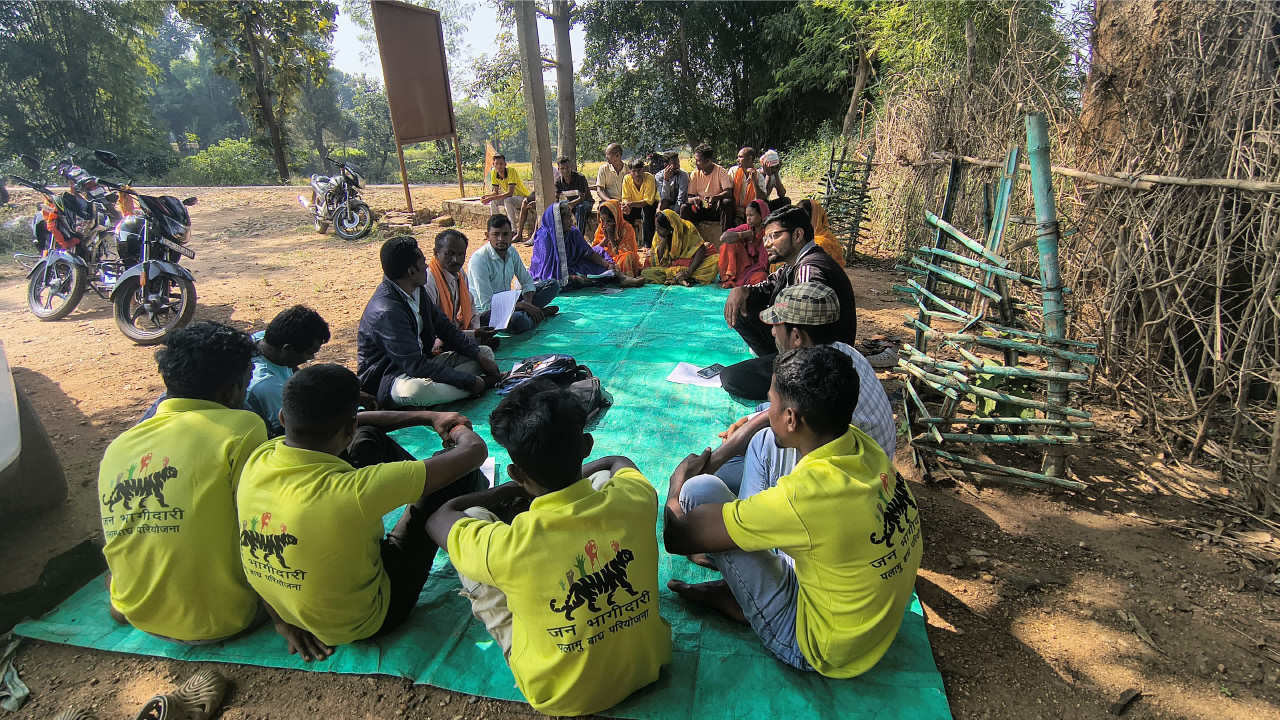
Implementation began with outreach and counselling in Gram Sabhas across PTR. Forest officials engaged village communities, surveyed local youth and encouraged participation in the previously unused residential training. This collaborative approach ensured social validation and ownership.
Infrastructure was created without any pre-existing departmental scheme. Funds came from government convergence and Corporate Social Responsibility support. The Deputy Director led the programme design and adapted it to local needs. They worked to continuously motivate both staff and trainees.
Training involved a full daily schedule. It combined technical instruction in trades such as carpentry and tailoring, along with computer skills, with yoga, physical training, sports and sessions on spoken English and etiquette. Jungle treks and community cleaning drives were also included. Trainees interacted with senior officers and public representatives, building confidence and aspiration. After completion, trainees were linked with employers nationwide or helped to start local enterprises through group formation and by aligning with relevant government support schemes.
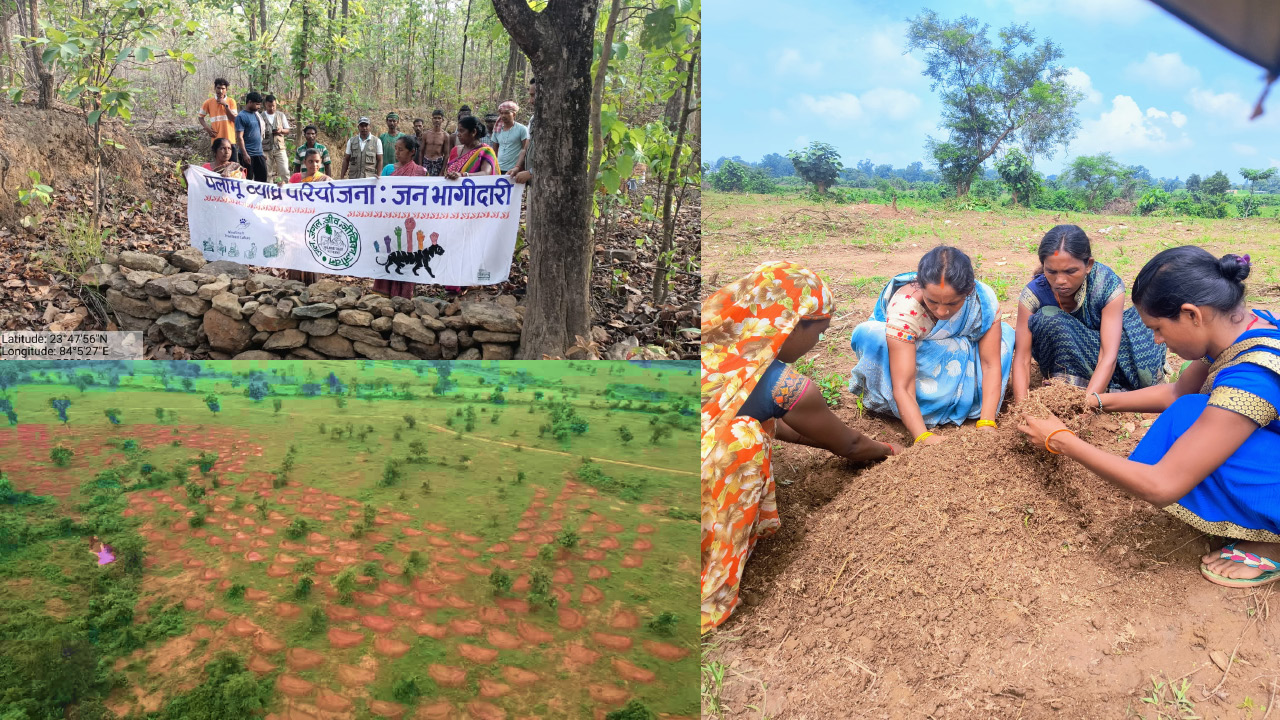
PTR also implemented watershed interventions across about 300 hectares. As shown in the outcomes chart on page 3 of the concept note, nearly 100 crore litres of water were conserved. Surface runoff was reduced, groundwater recharge improved and fertile topsoil preserved. These interventions made agriculture more viable and created many wage jobs.
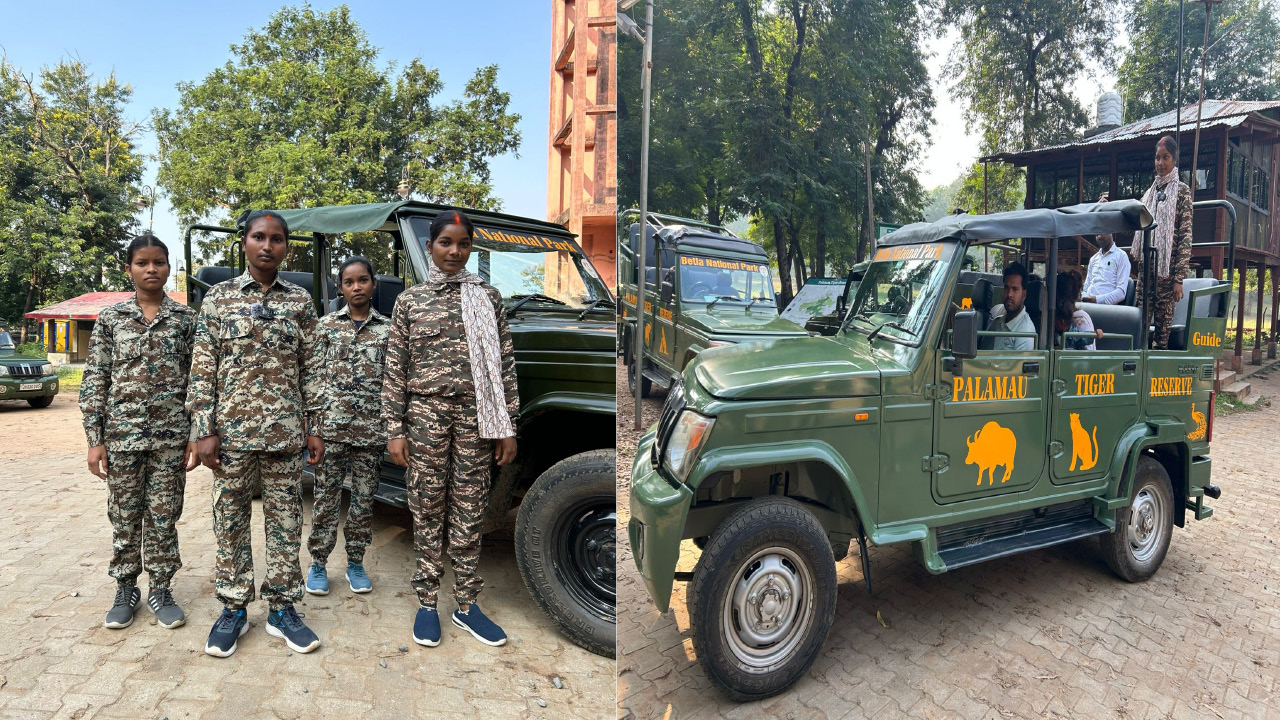
Women’s participation was institutionalised through the formation of groups known as “Water Warriors” and the Pink Panther Initiative, which trained tribal women to serve as official wildlife safari guides in Betla National Park. Ajeevika Kendras (livelihood centers) were established to support women trainees facing mobility constraints.
Solutions Implemented
The initiative combined employment-linked skilling with ecological restoration. Residential skill training led to certification and job placements. Watershed management reduced drought and improved agricultural stability. Women joined conservation tourism and micro-enterprises, promoting gender inclusion. Engagement with Gram Sabhas made governance participatory and gained community support.
The “Hunar Se Rojgar” initiative adopted a convergence-based implementation model that integrates livelihood generation with ecological restoration and community participation. Extensive outreach and counselling were conducted across 199 villages in the Palamau Tiger Reserve landscape to mobilise tribal youth for structured residential training programmes.
The programme offers 45-60 day NSDQ-certified skill training in trades such as tailoring, light motor vehicle driving, hospitality services, computer-based public services, electrical works, and other market-linked sectors. Training modules go beyond technical skills to include communication, personality development, physical training, and cultural engagement, ensuring holistic capacity building.
Simultaneously, watershed interventions were implemented across approximately 300 hectares, conserving nearly 100 crore litres of water while improving groundwater recharge and agricultural viability. These activities generated substantial wage employment and strengthened local resource governance. The initiative further established employer linkages across states, ensuring job placements after certification, while also supporting self-employment through handholding and convergence with government schemes. Women-focused interventions, including Ajeevika Kendras and the “Pink Panther” eco-tourism initiative, expanded livelihood avenues and strengthened community ownership.
Details of the Coverage
As of the evaluation period from 23 January 2025 to 05 February 2026, more than 350 tribal youth have completed training and certification, with the 13th batch underway. The combined impact of skill and watershed interventions, where ‘skill interventions’ refers to vocational training and ‘watershed interventions’ refers to projects that improve land and water management has generated employment and income opportunities for over 400 families and reduced seasonal migration.
Gram Sabhas in over 30 villages have formally endorsed and recommended continuing the initiative. The community has seen less distress migration, improved farm output, fewer forest fires and better waste management.
Innovation and Unique Features
Hunar Se Rojgar shifts from protection-based to partnership-based conservation. It combines livelihood generation, water conservation, women’s empowerment and community stewardship within a protected area.
The Pink Panther Initiative trains tribal women as wildlife safari guides. This is the first such programme in Betla National Park and raises women’s visibility in public economic roles. Combining skills training with watershed works, which are projects focused on managing water resources and soil conservation creates an ecological and economic multiplier effect. This strengthens both conservation and income stability.
Challenges Faced
The initial implementation faced funding constraints and infrastructure limitations due to the absence of a dedicated departmental scheme. Motivating forest staff to adopt a non-traditional conservation approach required persistent leadership. Persuading tribal youth to join residential training programmes for the first time posed social challenges. Providing suitable job placements and reaching out to all 180 villages in the PTR landscape required nearly 350 tribal youth to be skilled and employed or supported in self-employment.
Soft skills and community engagement have made trainees confident conservation advocates. Villagers’ voluntary support has reduced poaching, tree felling and other forest offences. The initiative has addressed chronic migration and created eco-clubs that foster peer support and conservation awareness. Watershed works have saved nearly 100 crore litres of water. They have improved agricultural productivity and made livelihoods more resilient.
Outcomes
The “Hunar Se Rojgar” initiative has generated measurable socio-economic and ecological outcomes within the Palamau Tiger Reserve landscape. As of December 2025, 282 tribal youth from economically vulnerable pockets have received structured skill training, while overall more than 350 youth have been trained and certified under the programme. The combined impact of skilling and watershed interventions has created employment and income opportunities for over 400 families, alongside substantial man days through natural resource works. Observable reductions in seasonal distress migration have been reported by Gram Sabhas across more than 30 villages.
Ecologically, watershed works across approximately 300 hectares have conserved nearly 100 crore litres of water, improved groundwater recharge, reduced surface runoff, and preserved fertile topsoil. These improvements have strengthened agricultural continuity and reduced pressure on forest extraction. Women’s participation has expanded through the “Pink Panther” initiative and related livelihood activities, enhancing their visibility in conservation tourism and enterprise. Overall, the programme has strengthened community trust in the Forest Department and positioned tribal youth as active stakeholders in participatory conservation.