

PALASH – Branding and Marketing for Rural & Tribal Women Entrepreneurs and Artisans Products of Jharkhand
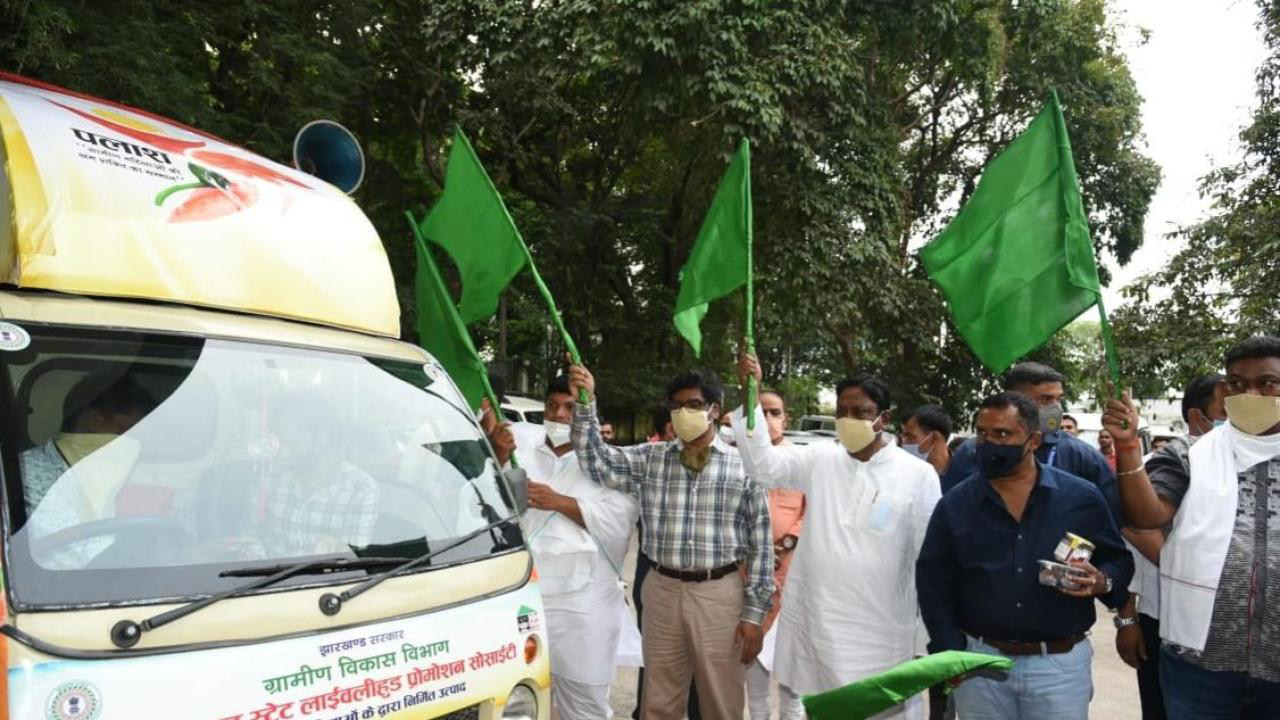
PALASH – Branding and Marketing for Rural & Tribal Women Entrepreneurs and Artisans Products of Jharkhand
Problem
- Lack of a perennial market for products by rural and tribal women entrepreneurs
- Presence of middlemen diminishing direct market access and profits for women entrepreneurs
- Challenges in building trust among consumers for an unknown brand
- The need for capacity and skill development among rural and tribal communities
Solution
- Introduction of “Palash”, a brand owned by rural women SHG entrepreneurs and artisans, providing direct market access
- Implementation of end-to-end value chain branding and marketing strategies
- Diversification into 29 different product categories under the Palash brand
- Comprehensive training and skill development initiatives for women entrepreneurs
- Effective packaging, branding, and institutional sales efforts to compete in open markets
Outcomes
- Engagement of over 6.75 lakh rural and tribal women agripreneurs, entrepreneurs and artisans under the Palash branding strategy
- Equipping rural women entrepreneurs with the skills to manage end-to-end value chains
- Significant growth in community credit absorption due to the branding and marketing strategy
- Providing consumers access to natural and local products, thereby building brand loyalty
Project Details
Category: Livelihoods
Project Title: PALASH – Branding and Marketing for Rural & Tribal Women Entrepreneurs and Artisans Products of Jharkhand
Department or District: Department of Rural Development, Government of Jharkhand
State: Jharkhand
Start Date of the Project: 28th September 2020
Website: https://www.jharkhand.gov.in/rdd
Tribe(s) that the Project Covers: The project primarily benefits tribal communities in Jharkhand, including Santhal, Munda, Ho, Oraon, and other indigenous groups residing in rural regions.
Keywords: Tribal Livelihoods, Women Empowerment, SHG, Rural Market, End-to-End Value Chain, Collectivisation, Indigenous Products, Sustainability, Vocal for Local
PALASH is a visionary initiative launched by the Department of Rural Development, Government of Jharkhand, through the Jharkhand State Livelihood Promotion Society (JSLPS), to transform the economic landscape for tribal and rural women. It aims to build a sustainable ecosystem around local enterprise by creating a branded market presence for indigenous and naturally produced goods, empowering women through entrepreneurship.
The Project
The PALASH project is rooted in the ethos of “Farm to Plate” and “Vocal for Local.” It envisions establishing a community-owned, end-to-end value chain system that connects producers—largely women members of Self Help Groups (SHGs)—with national and international markets. The brand encompasses over 29 product categories including edible and non-edible items, processed in rural centres and sold through PALASH marts and e-commerce platforms.
Problems that it Intends to Solve
The initiative addresses the lack of market accessibility for tribal women, the dominance of middlemen, and the absence of a unified brand identity for natural, indigenous products. Prior to PALASH, the economic viability of local produce was minimal, with limited livelihood options for women.
Need and Rationale
The need for PALASH emerged from a critical gap: tribal women, despite having produce and skills, lacked branding, marketing, and organized retail platforms. There was also an urgency to build consumer trust in rural products and to institutionalize quality standards.
Implementation Process
The project followed a structured approach beginning with product identification, cluster formation, and collectivization. Processing, quality grading, and modern packaging followed, establishing an integrated chain from sourcing to retail. This was supported by the establishment of 231 Palash Marts, 70 display counters, 95 processing units, and 9 packaging centres.
Government involvement was central, with JSLPS anchoring the entire rollout. NGOs were indirectly involved in training and grassroots mobilization. Most significantly, the community itself was deeply embedded in the execution, with SHG members owning and operating each unit of the chain.
Solutions Implemented
The branding strategy focused on a bottom-up model. Women-led Producer Groups (PGs), Farmer Producer Organizations (FPOs), and community institutions were trained in collectivization, value addition, packaging, and retailing. A trademarked brand identity was established, supported by SOPs and a brand book. Marketing strategies included both offline and online sales, participation in national fairs like SARAS Mela, and institutional sales through platforms like GeM.
Details of the Coverage
As of FY 2023-24, the project expanded to over 10,500 PGs covering approximately 472,000 rural producers and artisans. The plan targets 15,000 PGs and over 675,000 individuals by FY 2024-25. Approximately 1.34 lakh women have been directly integrated into the PALASH ecosystem.
Innovation and Unique Features
PALASH is one of India’s first examples of a state-led rural brand that competes with multinational products in terms of quality and packaging, without relying on grants or special aid. It is 100% business-model driven and has integrated government schemes such as DMFT, Rurban Mission, and CSR funds for expansion. The use of tribal imagery, traditional product knowledge, and co-created community SOPs also mark PALASH as a culturally sensitive and inclusive initiative.
- New Approaches: Tech integration, capacity building, culturally sensitive methods
- The integration of local governance structures, tribal knowledge in product design, and the direct involvement of SHG women in business decision-making represents a powerful co-creation model. Capacity-building workshops have improved managerial, financial, and branding competencies.
- Any adaptations: How the project evolved during implementation
- During its rollout, PALASH transitioned from a rural marketing idea to a holistic enterprise ecosystem. Challenges such as inventory management and financial literacy led to the creation of an MIS system and targeted training programs for grassroots teams.
Challenges Faced
Internally, organizing SHG women and aligning them into formalized business models was a major hurdle. Externally, there were concerns around market viability, packaging standards, and scaling up local knowledge to meet retail demands.
Internally, building managerial skills and technical capacity among rural entrepreneurs was a challenge. Externally, consumer trust and establishing retail viability remained hurdles. These were mitigated by extensive branding campaigns, high-quality packaging, and the demonstration of quality through successful market penetration.
Outcomes
- Quantitatively, the turnover since inception has reached ₹16.81 crore. Over 2,137 women-led enterprises have emerged with average turnovers of ₹11.5 lakhs each. Financial investments of ₹19 crore have been mobilized at the community level.
- Qualitatively, the project has catalyzed dignity-led economic empowerment. Women now manage business operations, negotiate markets, and participate in trade fairs. The perception of rural products has shifted dramatically, gaining both consumer confidence and institutional recognition.
- A state-level Palash MIS platform has been developed for real-time monitoring of inventory and sales. Quality assurance centres and packaging audits have institutionalized standards.
Replicability / Scalability / Sustainability
PALASH’s model is now being shared with other State Rural Livelihood Missions (SRLMs) across India. The systemic integration with existing government schemes ensures financial sustainability. The brand’s expanding consumer loyalty and self-sustaining value chain underline its replicability.