Shabari Naturals: Branding Indigenous Excellence for Tribal Livelihoods

Shabari Naturals: Branding Indigenous Excellence for Tribal Livelihoods
Problem
- Tribal communities in Maharashtra faced significant economic challenges due to the lack of structured market access and fair pricing mechanisms for their indigenous products
- Despite producing high-quality natural products, tribal producers struggled to reach wider markets beyond their local communities, resulting in undervaluation of their goods
- Traditional products were often sold in raw form with minimal processing, leading to lower profitability and missed opportunities for premium pricing
- Tribal products lacked standardization, attractive packaging, and branding, making them less competitive in urban and international markets
- Remote tribal areas faced challenges in logistics, storage, and timely distribution of goods, making it difficult to scale operations effectively
Solution
- The establishment of an organized brand under the aegis of Shabari Adivasi Vitta Va Vikas Mahamandal helped tribal communities market their products under a recognized and trusted name
- The initiative leveraged digital platforms and established direct-to-consumer sales channels to connect tribal producers with national and international markets
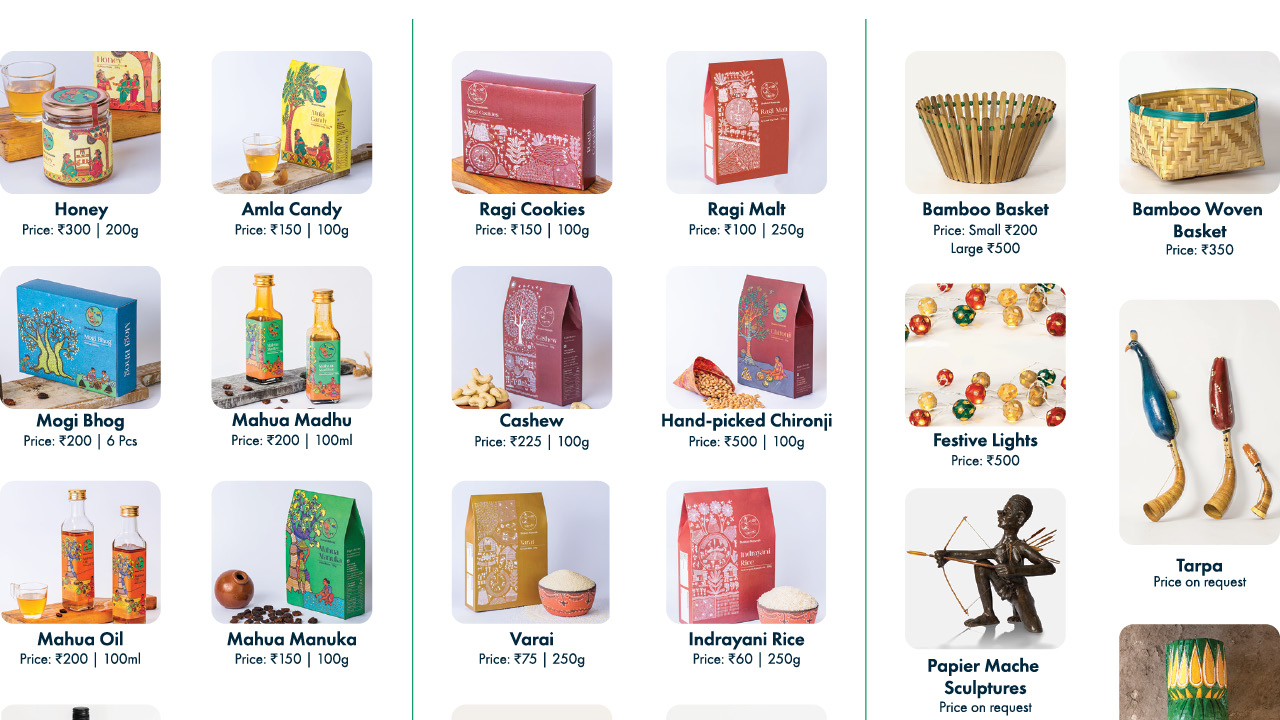
- Training programs were introduced to teach value addition techniques, enabling tribal entrepreneurs to create premium-quality products such as Mahua chocolates, honeyed Amla candies, and hand-pounded rice
- Modern branding techniques, including unique tribal art-inspired packaging, were developed to differentiate products in competitive markets and enhance consumer appeal
- Investments in storage facilities, better transportation, and an organized supply chain helped ensure efficient logistics and consistent product quality
Outcomes
- By branding and positioning their products in premium markets, tribal entrepreneurs have witnessed higher earnings and improved livelihoods
- Shabari Naturals products are now available across various e-commerce platforms and retail outlets, ensuring nationwide access and international visibility
- The initiative has helped urban consumers appreciate and purchase tribal products, increasing demand and encouraging cultural exchange
- The use of tribal art in packaging has strengthened brand recognition, preserving cultural heritage while enhancing commercial appeal
- Hundreds of tribal individuals have undergone training in product development, branding, and marketing, fostering self-reliance and entrepreneurship
Project Details
Category: Livelihoods
Project Title: Shabari Naturals – A Brand for Authentic Tribal Products
Department or District: Shabari Adivasi Vitta Va Vikas Mahamandal Maryadit, Nashik
State: Maharashtra
Start Date of the Project: 5th September 2024
Website: https://mahashabari.in/
Tribe(s) that the Project Covers: The project serves Scheduled Tribes across Maharashtra, including but not limited to Kokna, Bhil, Warli, and Katkari communities. These tribes are concentrated in tribal-dominated areas such as Nashik, Nandurbar, Palghar, and Gadchiroli districts.
Keywords: Mahua Chocolate, Tribal Entrepreneurship, Van Dhan Yojana, Tribal Livelihoods, Cultural Preservation, Tribal Artisans, Adivasi Empowerment
Shabari Naturals is a state-backed initiative developed by the Shabari Adivasi Vitta Va Vikas Mahamandal to create market linkages for indigenous tribal products by transforming raw traditional items into value-added, branded consumer goods. The goal is to empower tribal communities by facilitating better access to premium markets and enhancing livelihoods while preserving tribal heritage.
The Project
Shabari Naturals functions as a collective marketing and branding platform that aggregates tribal produce, applies value addition processes, and brings products such as Mahua chocolates, honeyed Amla candies, hand-pounded rice, millet snacks, and tribal rice varieties to urban and international markets. The project enhances traditional livelihoods by integrating modern branding, quality control, and digital commerce strategies while incorporating the cultural identity of the producers.
Problems that it Intends to Solve
The initiative addresses the marginalization of tribal producers who have historically been unable to access fair pricing or scale their reach due to poor branding, lack of product standardization, and minimal value addition. Products were often sold in raw or unprocessed forms and lacked modern packaging, making them non-competitive in urban or export markets.
What Was the Need
The absence of organized marketing mechanisms meant that tribal artisans and farmers could not monetize their indigenous knowledge or natural produce. Without branding or digital access, their earnings were suppressed, and traditional practices were at risk of extinction. A structured intervention was essential to build a sustainable and scalable tribal livelihood ecosystem.
What Hindered its Introduction
The major constraints were logistical difficulties in remote areas, lack of skill among tribal producers in modern business practices, and absence of brand recognition. Moreover, sustainable sourcing, eco-friendly packaging, and the development of a robust distribution network required significant investment and coordination.
Process Followed for Implementation
The project started with field research and producer identification in tribal districts. Training programs were designed for value addition, packaging, and quality control. A supply chain was established from tribal clusters to processing centers, and modern branding was introduced using tribal art-inspired designs. Sales channels were created via exhibitions, retail outlets, and e-commerce platforms. Eco-friendly packaging was adopted, and standardization measures were enforced to ensure consistency in product quality.
The project was spearheaded by the Shabari Adivasi Vitta Va Vikas Mahamandal under the Department of Tribal Development, Government of Maharashtra. State financial support and integration with welfare schemes provided a strong institutional backbone for the project
Partner organizations such as Yuva Mitra and Bharat Rural Livelihoods Foundation (BRLF) supported grassroots mobilization, capacity building, and sustainable harvesting efforts.
Solutions Implemented
The initiative introduced tribal branding, improved packaging, standardized quality checks, and developed a digital commerce model. It also created cultural narratives around products, such as Mahua-based items, to emotionally connect with consumers. Cold chains and logistics hubs were set up to maintain product freshness and reduce spoilage.
Currently, Shabari Naturals reaches across 10 tribal districts in Maharashtra and supports over 1000 tribal entrepreneurs. Products are listed on major e-commerce platforms, featured in tribal exhibitions, and available in regional retail stores.
Innovation and Unique Features
- The unique blend of tradition and technology defines the innovation of Shabari Naturals. Packaging is inspired by tribal artwork, and every product story reflects the community that produced it. This heritage-focused branding distinguishes it from mainstream FMCG competitors.
- The project leveraged offline and online platforms, adopted QR-based product tracing, and trained community members in financial literacy and digital marketing. Sustainable packaging and harvesting techniques were introduced to align with environmental norms.
- Tribal elders and artisans co-developed product ideas, especially for unique foods like Mahua chocolates, ensuring authenticity and community buy-in. The packaging and storytelling were built on cultural motifs and community inputs.
- The original business model evolved to include cooperative SHGs, focused training modules for women, and improved backend support to address challenges like order delays and stock mismatches in online platforms.
Challenges Faced Before Implementation
- Internally, the lack of a structured sales and logistics framework hampered initial planning. Externally, the remoteness of tribal settlements and low digital literacy among producers delayed onboarding and training processes.
- A phased rollout, intensive training, creation of local processing units, and onboarding of logistics partners like India Post and private courier services were used to streamline operations and overcome bottlenecks.
- As the initiative scaled, maintaining uniform quality, meeting demand fluctuations, and financing procurement became pressing issues.
- Quality control mechanisms were introduced with checklists and batch testing. Credit linkages were created through state-backed financing schemes, and demand aggregation was supported using e-commerce analytics.
Outcomes
The initiative has directly impacted over 1000 tribal producers and led to a revenue increase of ₹50 lakhs within the first six months of launch. Product lines expanded to over 25 items, with a growing customer base across India and select global markets.
Shabari Naturals has led to renewed pride among tribal communities, recognition of tribal art and food, and better household incomes. Stories of transformation, such as improved livelihoods for Mahua collectors and hand-pounded rice processors, reflect deep social impact.
The initiative uses a real-time dashboard for sales tracking, inventory updates, and beneficiary mapping. Impact studies and beneficiary feedback are collected periodically to inform program evolution.
The primary beneficiaries are tribal SHGs, individual producers, and community processing units. Indirect beneficiaries include youth employed in logistics, marketing, and packaging roles.
Replicability / Scalability / Sustainability
Given its modular and cooperative-based model, Shabari Naturals is easily replicable across tribal regions in India. The initiative plans to expand pan-India through a ₹100 crore investment over the next five years.
The project aligns with the Van Dhan Yojana and PM-FME Scheme, and it promotes the tribal agenda under the State Tribal Sub Plan. It also supports SDGs like no poverty, gender equality, and sustainable consumption.
With early revenue success, diversified product lines, and mixed funding from the state and retail margins, the project is on track for long-term viability. Financial education is embedded in training to improve tribal financial resilience.
Other tribal states such as Chhattisgarh, Odisha, and Jharkhand have expressed interest in adapting the Shabari Naturals model. Toolkits, training materials, and digital templates are being prepared for easy knowledge transfer.