Enhancing Sports Opportunities for Tribal Students in Telangana
Enhancing Sports Opportunities for Tribal Students in Telangana
Problem
- Tribal regions had almost no playgrounds, courts, or equipment, preventing children from accessing
- Remote areas faced a severe shortage of trained coaches, hindering talent development
- Parents were unfamiliar with sports careers, worried about injuries, and reluctant to send children (especially girls) away for training
- Students could not afford shoes, gear, travel expenses, or equipment, keeping them away from competitive events
- Students lacked exposure to district/national competitions, feared stepping outside home environments, and were demoralised by early defeats
Solution
- Two full-fledged sports schools (Eturnagaram for boys, Chegunta for girls) and 20 mini-sports academies were created with proper infrastructure
- Endurance tests, aptitude assessments, structured physical fitness programmes, and mentoring by trained coaches ensured systematic athlete development
- Students received free uniforms, shoes, gear, textbooks, utensils, and accommodation—removing all financial barriers
- Regular counselling sessions, village meetings, parent-teacher interactions, and showcasing student achievements helped build trust and acceptance
- Training respected tribal lifestyles, ensured girls’ inclusion, aligned with school academics, and introduced peer mentoring tools like the Quartet System and Mirror Project
Outcomes
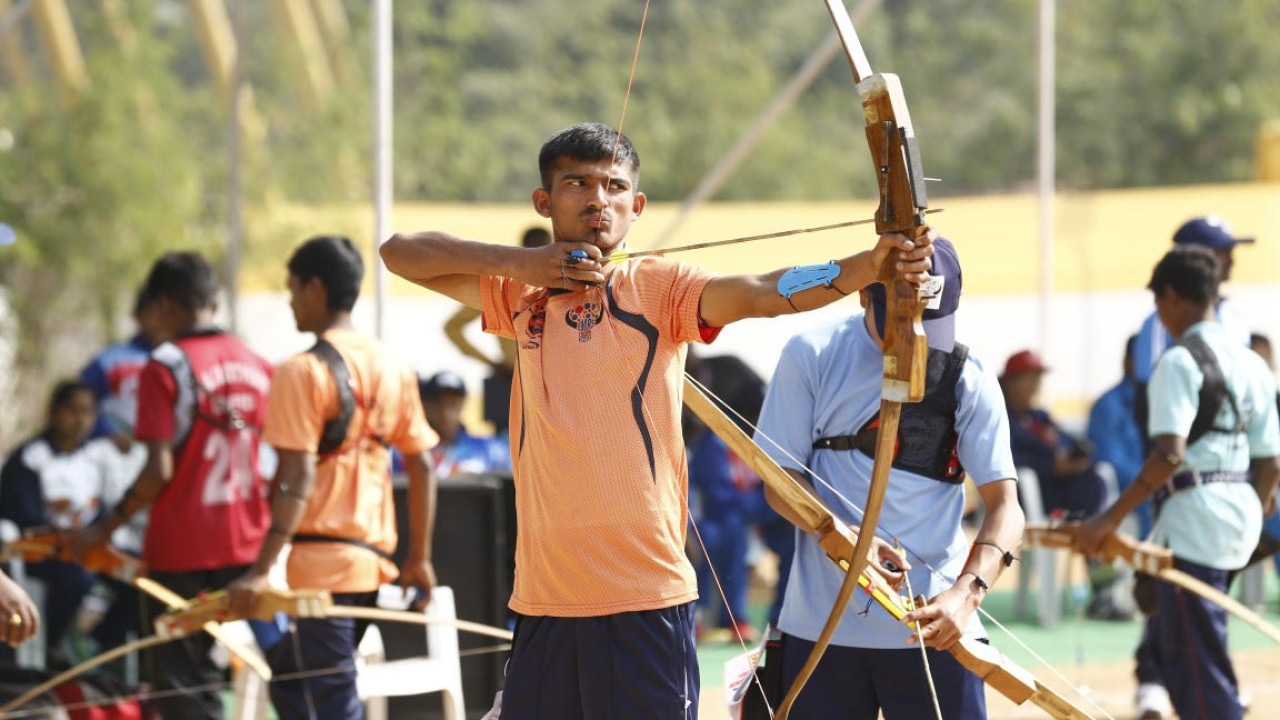
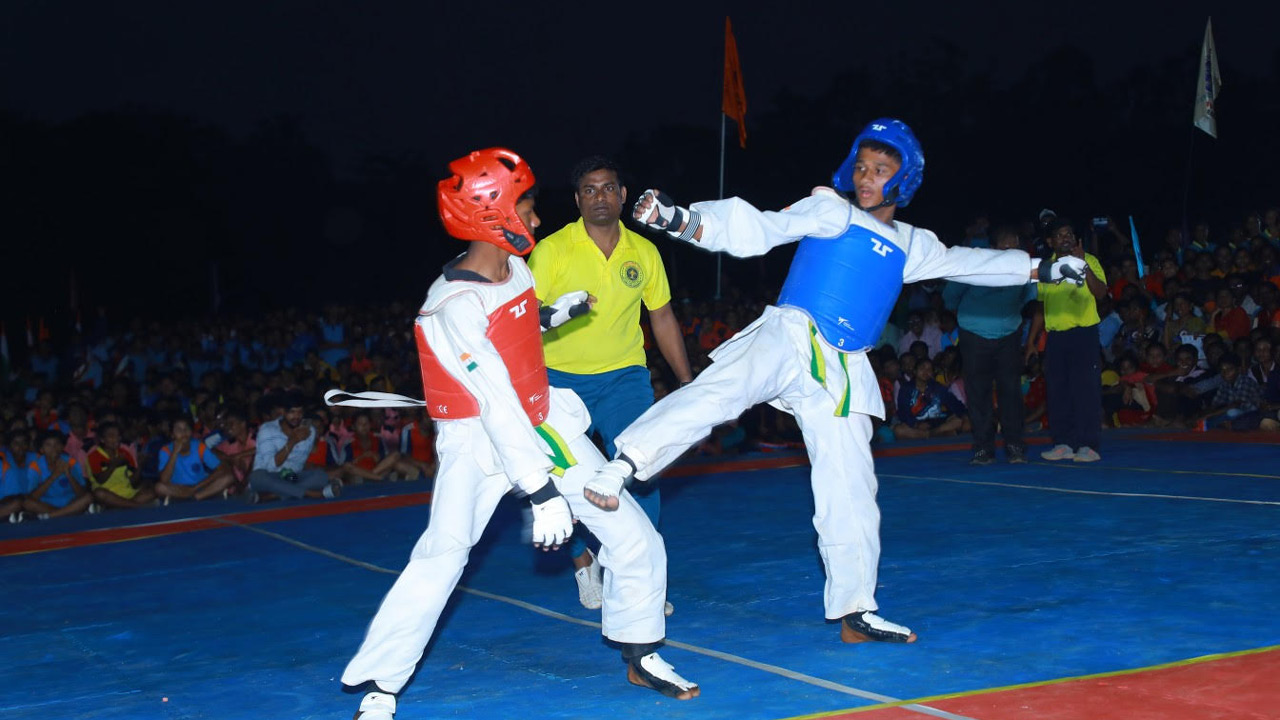
- Students won medals at state, national, and international levels in yoga, volleyball, archery, cricket, etc., and participated in adventure sports like rock climbing and Everest Base Camp expeditions
- 18 EMRS schools recorded 100% CBSE results, 80% students achieved First Class, and many secured prestigious college admissions
- Parents who were once hesitant began encouraging their children as they saw real success stories, scholarships, and career pathways
Project Details
Category: Tribal Welfare – Land Rights and Resource Management
Project Title: Telangana EMRS Sports Integration Initiative
Department or District: Tribal Welfare Department, Telangana
State: Telangana
Start Date of the Project: 2021
Website: https://ts.meeseva.telangana.gov.in
Tribe(s) that the Project Covers: The project serves multiple tribal communities including the Yenati, Koya, Lambada, Yerukula, Chenchu, Kolam, and Thoti tribes residing across Telangana’s tribal belts.
Keywords: Tribal Welfare, Sports for Development, EMRS, Community Engagement, Tribal Empowerment, Archery, Adventure Sports, Inclusive Education, Youth Leadership, Rural Sports, Tribal Girls in Sports
This highlights a pioneering initiative by the Tribal Welfare Department of Telangana to empower tribal youth through structured sports education. Implemented through the state’s network of Eklavya Model Residential Schools (EMRS) and tribal welfare residential institutions, the project recognizes sports as a transformative tool for holistic development and inclusion. The initiative not only nurtures athletic talent among marginalized communities but also provides access to physical fitness, leadership training, and national exposure ultimately bridging development gaps that have persisted for generations.
The Project
Launched in 2021, the initiative integrates competitive and grassroots sports into the daily lives of tribal students across Telangana’s EMRS and Tribal Welfare Residential Schools. Recognizing that rural and tribal children often lack access to structured athletic training, the state set up decentralized sports academies and dedicated sports schools to provide equipment, coaching, and exposure to competitions. Two model residential sports schools, one for boys in Eturnagaram and one for girls in Chegunta serve as focal institutions under the initiative, alongside 20 mini-sports academies across the state.
The programme draws strength from convergence between central schemes like EMRS (by the Ministry of Tribal Affairs) and state-level policies, combining educational upliftment with physical training. The aim is not just to develop athletes, but to foster discipline, teamwork, and resilience among tribal youth.
Problems that it Intends to Solve
Before this initiative, tribal students in Telangana faced persistent structural barriers:
- Lack of access to proper sports infrastructure in remote areas.
- Limited or no coaching facilities for competitive training.
- Parental resistance due to unfamiliarity with sports as a career path.
- Cultural and psychological reluctance among students to leave home environments.
- Financial barriers preventing participation in sports events or purchase of equipment.
- Absence of exposure to inter-district or national competitions.
These challenges not only denied tribal children the joy of sport but also kept them excluded from pathways that could lead to scholarships, education, or employment opportunities.
What was the Need
The government identified sports as a critical yet overlooked lever for tribal development. Sports can foster confidence, enhance school engagement, and open up career and scholarship opportunities especially for students in remote areas who face systemic disadvantages.
Moreover, role models such as Malavath Poorna, a tribal girl from Telangana who summited Mt. Everest at 13 demonstrated that with support, tribal youth can achieve remarkable things. The state recognized the need to systematically identify such talent and nurture it early through training, infrastructure, and exposure.
Initial obstacles included:
- Lack of trained coaches in remote areas.
- Low awareness among students and parents about the value of sports.
- Scarce infrastructure like playgrounds, equipment, or courts.
- Perceived academic trade-offs, with teachers concerned that sports might distract from studies.
- Budget constraints and bureaucratic hurdles in recruiting coaches or building facilities.
The cultural unfamiliarity with formal sports particularly for tribal girls also posed social barriers that required sensitive handling.
Process Followed for Implementation
The Tribal Welfare Department led implementation, supported by the Telangana Tribal Welfare Residential Educational Institutions Society (TTWREIS). Starting with mini-sports academies across 20 schools in 2018–19, the department scaled up by creating full-fledged sports schools in 2021–22. Dedicated coaches were recruited and supplied with specialized equipment. Partnerships with mountaineering institutes, Khelo India, and national sports authorities were forged to provide exposure.
While primarily government-driven, the program collaborated with adventure training organizations, sports federations, and local NGOs. Inspirational figures like Malavath Poorna mentored students and participated in training programmes.
Extensive outreach was conducted to involve parents and village elders. Regular counselling sessions demystified sports as a career, addressed safety concerns, and built trust. The community was kept involved through school events, parent-teacher meetings, and local celebrations of student achievements.
Solutions Implemented
- Establishment of Sports Schools Across Telangana: EMRS set up multiple sports institutions across the state, strategically located to ensure accessibility for tribal students. These centers provided dedicated facilities for various sports, including rock climbing, mountaineering, archery, and athletics.
- Rigorous Training Programmes and Endurance Testing: Students interested in sports were selected based on their physical fitness and potential, followed by endurance and aptitude tests. Intensive training programmes were then offered, which focused on skill development, physical endurance, and mental resilience.
- Provision of Free Amenities and Equipment: Recognising financial constraints, the programme provided essential items such as clothing, sports shoes, school bags, and sports equipment free of charge. These resources ensured that financial barriers did not hinder students’ ability to participate fully in sports activities.
- Parental Counseling and Community Engagement: EMRS engaged parents through regular counseling sessions, highlighting the benefits of sports training and education. By educating parents on the importance of sports in building discipline, physical health, and career opportunities, the initiative succeeded in gaining community trust and support.
- Tailored Training Programmes and Cultural Sensitivity: Training programmes were designed to respect tribal traditions while encouraging athletic growth. Specialised coaches, aware of the cultural backgrounds of students, ensured that training incorporated elements familiar to tribal lifestyles, making the transition smoother and more relatable for students.
- The TGTWREI Society has also established 02 Sports Schools at Eturnagaram (Boys) and Chegunta (Girls) in existing TGTWREIS to provide quality sports education and Specialized Coaching to the meritorious players through top class infrastructure and by renowned Coaches at National and International level for the benefit of the budding sports stars who are trained in Sports Academies and excelling in National and International arenas.
Innovation and Unique Features
- Early talent identification through physical endurance tests from Class VI.
- Training in unique disciplines like rock climbing, archery, and yoga alongside formal education.
- Adventure sport initiatives including participation in national events and trekking expeditions.
- Students, coaches, and school staff co-designed training schedules.
- Communities were consulted to preserve cultural sensitivity while adapting school curriculum.
- Peer-led mentoring systems (Quartet System) and communication-building tools (Mirror Project) were introduced to address soft-skill gaps.
Challenges Before Implementation
- There was a lack of coaching staff and inadequate sports infrastructure within tribal welfare schools.
- The school systems prioritized academics, making it difficult to introduce sports programmes.
- Resistance existed toward integrating structured athletic training into school timetables.
- Initially, students were reluctant to attend educational and sports institutions, and families were hesitant to allow them to leave their familiar environments.
- Many tribal villages were geographically remote, posing logistical barriers.
- Awareness about scholarships and sports quotas among students and parents was minimal.
- Balancing academics with intensive sports training proved to be a significant challenge
- High coach turnover occurred due to difficulties in working at remote locations.
- Parents expressed anxiety about travel-related safety and the risk of sports injuries.
- Early defeats in competitions had a demoralising effect on students.
Mitigation Efforts During Implementation
- Parents were the initial focus of outreach to build acceptance and understanding of sports education.
- A few educational and sports academies were established as pilot centers to demonstrate success.
- Students were selected through physical and endurance tests, ensuring talent identification at an early stage.
- Once admitted, students received free amenities including uniforms, school bags, sports gear, footwear, utensils, and textbooks to remove financial barriers.
- School leaders were oriented through structured workshops to align with the programme goals.
- Teachers and coaches conducted outreach programmes in villages to build trust and awareness.
- Consistent efforts by both NGOs and government agencies helped implement the project effectively.
- The dual excellence model ensured that academic coaching was provided alongside sports training.
- Injury protocols and awareness drives were introduced to address parental concerns
- Coaching in a growth mindset and resilience helped students handle losses.
Outcomes
Quantitative
Between the academic years 2017–18 and 2023–24, students from Telangana’s tribal welfare residential schools demonstrated outstanding achievements in sports competitions at the state, national, and international levels.
- 300+ students received structured training
- Multiple national medals in yoga, volleyball, and archery
- Students admitted to National Sports University and prestigious colleges
- 18 EMRS schools achieved 100% CBSE pass results
- 80% of students secured First Class, 42% secured Distinction
- Adventure sports participation including rock climbing and a successful expedition to the Everest base camp
- Consistent presence and wins in Mandal, state, and national level sports competitions organized by the School Games Federation of India (SGFI)
- Many students secured second place in national-level competitions organized by the National Education Society for Tribal Students (NESTS), Ministry of Tribal Affairs, Government of India
- Secured multiple prizes in state and national cultural fests organized by EMRS Society and NESTS (Ministry of Tribal Affairs).
- Students achieved first place in cultural and literary competitions like solo singing and tribal folk group dance.
- They were recognized and commended for excellence in showcasing tribal heritage and talent at national platforms.
These outcomes underscore the increasing effectiveness and reach of the sports initiative, reflecting the success of structured training, institutional support, and community engagement.
Top Student Achievements
Academic:
- Diana (Grade 12): Secured a good rank in LAW CET and was admitted to Mahatma Gandhi Govt. Law College, Hyderabad. Felicitated by the Project Officer, ITDA, Bhadrachalam. She is from the Koya tribe, hailing from Darmapeta Mandal, Bhadradri district, and received a ₹36,000 scholarship from the ITDA relief fund.
- G. Krishna Veni (Grade 10): Passed the CBSE board with distinction and was admitted to a prestigious government polytechnic college in Hyderabad. A first-generation learner from the Koya tribe, she comes from the interior village Oosugunta, adopted by the Governor of Telangana.
- Hari Lal (Grade 12): From EMRS Gandhari, secured a seat at the National Sports University, Imphal, Manipur for B.Sc. in Sports. From the Lambada tribe, he has earned many medals in state-level competitions and was appreciated by the Principal Secretary, Tribal Welfare Department.
Sports:
- T. Shilpa (Grade 12): Participated in an international volleyball tournament in Nepal where her team were runners-up. She is a first-generation learner from a forest-interior village and was felicitated by the Secretary, TGES.
- Navya (Grade 12): From EMRS Seerole, participated in the All India T20 Women’s Federation Cricket Match in Bihar. Won ‘Woman of the Match’ with a ₹30,000 prize. Belongs to the Lambada tribe and was felicitated by the community and district authorities.
- L. Ranjitha (Grade 11): From Yellareddypet school, won first place in a national-level yoga competition in Punjab. She is the only educated member in her four-person family from a poor tribal background
Cultural:
- D. Anil (Grade 11): From EMRS Balanagar, secured first prize in classical solo dance at the state cultural fest in Marimdla, Sircilla. Selected for the national cultural fest in Nov 2024. Hails from Yerukula tribe and trained under his school music teacher.
- M. Thirupathi (Grade 11): Also from EMRS Balanagar, won first prize in mono acting at the state cultural fest and was selected for nationals. Honed his skills through school’s Saturday Club activities.
- A. Indu (Grade 9): Secured first prize in solo instrumental music at the state fest in Sircilla, selected for nationals in Nov 2024. Developed her talent through school club activities.
Qualitative
- National and State-Level Sports Achievements: Students began participating in competitions at both state and national levels, achieving remarkable success. Many secured top positions in sports such as volleyball, yoga, and athletics, competing in major events and championships.
- Enhanced Physical and Academic Development: In addition to sports achievements, students experienced improved physical health and academic performance. The physical and mental discipline fostered by sports training translated into better focus and engagement in academic activities.
- Community Support and Increased Participation: The visible success of students in sports events led to a shift in community perception regarding sports education. Parents and community members began to view sports as a viable and beneficial aspect of education, resulting in increased participation from younger students.
- Opportunities for Scholarships and Higher Education: Talented students began receiving scholarships to support their further education and training. These scholarships not only helped financially but also motivated students to continue pursuing sports as a career, aiming for higher education institutions specialising in sports.
- Career Pathways and Personal Growth: For many students, sports training provided the foundation for a future career. Programmes such as mountaineering and archery opened up new pathways, with students envisioning careers in sports, coaching, or related fields. The initiative cultivated leadership skills, resilience, and a sense of pride among students, who became role models in their communities.
A continuous monitoring model is in place. School heads and TGES officials conduct periodic reviews. Student performance is evaluated in both academics and sports, while feedback from coaches and community members guides further improvements.
Beneficiaries
Primary beneficiaries include thousands of tribal students in EMRS and welfare residential schools. Both boys and girls from vulnerable tribal groups such as Kolam, Chenchu, Koya, and Lambada have participated. Secondary beneficiaries include communities, local economies (via school events), and aspiring coaches from the tribal community.
Replicability / Scalability / Sustainability
Policy Integration
- This model aligns closely with the National Education Policy (NEP) 2020 and the Khelo India framework.
- It is embedded within the operational structure of EMRS and tribal education policy at both state and central levels, ensuring long-term relevance.
- Already influencing SC welfare schools and inspiring replication efforts in states like Odisha and Chhattisgarh.
Financial Sustainability
- The initiative is supported through a blend of funding mechanisms: regular education budgets, the Tribal Sub-Plan (TSP), and allocations under Article 275(1).
- Efficient use of existing infrastructure (schools, hostels, and grounds) combined with outsourced expert coaching allows for cost-effective scalability.
- Flexibility in financial deployment ensures adaptability in various state contexts.
- The model holds high potential for implementation across all EMRS institutions in India, and possibly other residential school networks.
- Collaboration between government departments, NGOs, and educational bodies is key to its successful replication.
- Structured training, cultural adaptability, and community integration make the initiative scalable and impactful.
- The program is beneficial to all stakeholders—students, parents, educators, and community leaders—by fostering inclusion, leadership, discipline, and academic performance.
- Its success across diverse tribal communities in Telangana sets a precedent for national roll-out.
Gallery